Start with the wardrobe, not the product photograph
Before browsing, put two or three frequently worn outfits in mind: perhaps a dark coat and knitwear, a pale shirt and tailored trousers, or a simple dress. An accessory has more lasting value when it can join those outfits than when it looks striking only in isolation. Note the colours already repeated in your wardrobe and the shapes around your face. A scarf might echo a colour you wear often, soften a sharp neckline, or provide the one contrasting element in an otherwise quiet outfit. These are practical questions, not rules about what anyone ought to wear.
Treat product imagery as a starting point for comparison. Look at how much fabric is visible beside the model’s shoulders, where its ends fall and whether the pattern reads clearly from a distance. Then imagine the same item with your own coat or jacket rather than copying the pictured styling. Cropping, background colour and pose can make a scarf appear more prominent or more compact than it would in your usual outfit. If dimensions or composition matter to your decision, seek the individual product details instead of inferring them from the photograph alone.
A brand story that leaves room for the present
UniqueYou began in 2014 with scarves and clothing. Its history includes a pause and a return after the domain was recovered; that is more accurate than describing an uninterrupted run of trading. The original brown wordmark, horse motif and “Since 2014” detail belong to its visual identity, while a neutral taupe palette gives the presentation a restrained setting. Those elements help explain the brand’s look, but they do not substitute for checking an individual item. A recognisable identity can guide your expectations without settling questions of size, fibre content or suitability.
The useful recommendation is therefore to approach UniqueYou as a source of elegant, accessible accessories intended to sit alongside a woman’s existing wardrobe. Scarves can be expressive without demanding that every other piece be replaced. A patterned square might revive a familiar shirt; a plain wrap might make a busy outfit feel calmer. Neither effect is guaranteed by a label. It depends on the particular colour, scale and fabric, and on the clothes you actually reach for each week. That modest approach makes browsing less about an imagined new persona and more about finding a workable addition.
Read fabric descriptions as carefully as images
UniqueYou includes silk, cashmere and wool categories, alongside different scarf and shawl shapes. A category name is a useful way to narrow a search, not proof that every product has the same composition. Fibre content varies by product, so read the specific description and care information before deciding. Silk may appeal when you want a smoother-looking, lighter visual accent; wool or cashmere categories may be a better starting point when warmth and a softer-looking surface are priorities. The final choice still depends on the listed composition, dimensions and how you plan to wear the piece.
A photograph can suggest drape but cannot let you feel weight, softness or texture. Look for several views if available: laid flat to understand shape, worn to judge volume, and close enough to make the weave or print easier to assess. Check whether the fabric appears to hold a fold or fall into loose curves, while remembering that styling and lighting influence both impressions. A square scarf tied at the neck behaves differently from a long scarf wrapped twice or a shawl spread across the shoulders. Start with the wearing method you want, then compare materials within that shape.
Use composition to understand scarf scale
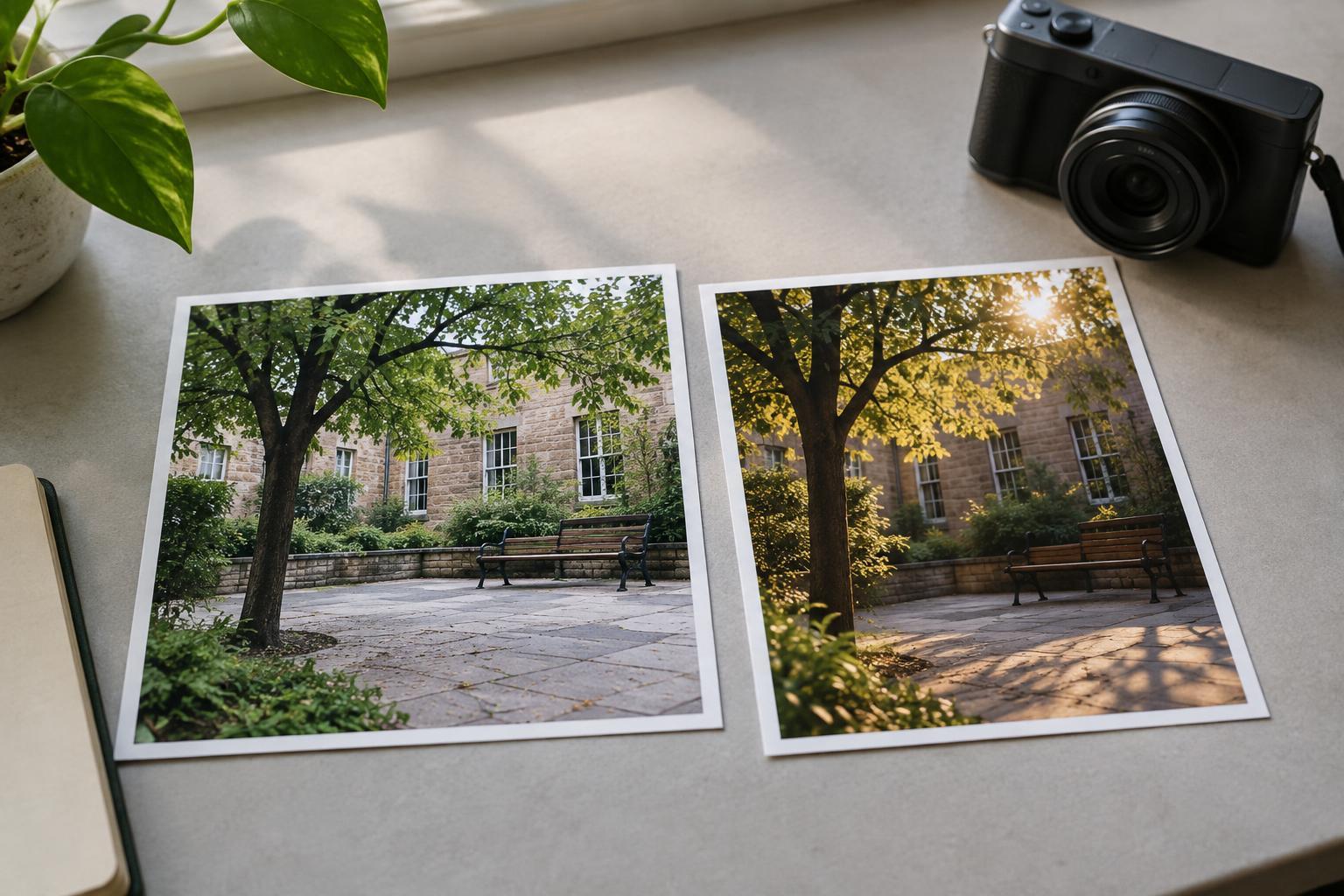
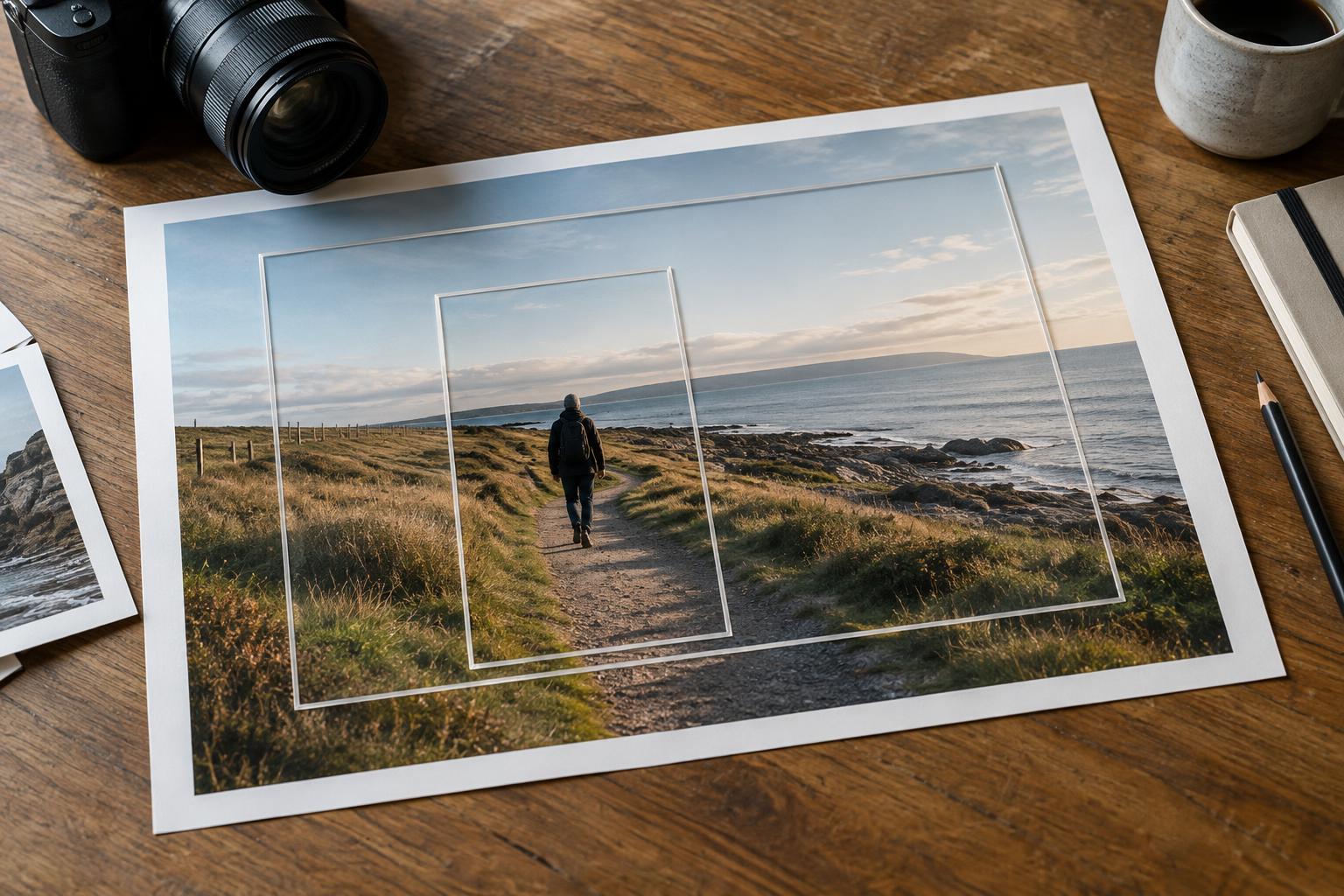
In photography, composition is the arrangement of visual elements inside a frame. In an outfit, the frame is less fixed, but the same questions help: where does the eye go first, what provides balance, and what has room to breathe? A narrow scarf near the face makes a different statement from a broad wrap covering the upper body. A small print may read as texture at conversational distance; a large motif may remain distinct across a room. If you prefer subtlety, consider how much of a patterned scarf will actually show once it is folded, knotted or tucked into a coat.
Try one change at a time when judging a candidate. Imagine it with the coat open, then closed; with a loose drape, then a closer knot. This is much like changing a camera angle while keeping the subject constant: the object has not changed, but its relationship to everything around it has. A square scarf can bring a focused shape to a plain neckline, while a longer style can draw the eye vertically. Neither is universally more flattering. The useful measure is whether its visible area feels proportionate to your clothes and comfortable for the way you move.
Consider colour under more than one kind of light
Colour is easy to overjudge from a single image. Daylight, warm indoor bulbs, a cool screen and a coloured background can each shift the apparent relationship between a scarf and the clothes beside it. When comparing options, look for consistent colour across images rather than treating one dramatic photograph as definitive. If your wardrobe is built around navy, charcoal or brown, a scarf can connect those shades through a shared undertone or deliberately interrupt them with a brighter note. A neutral choice is not automatically versatile; its precise warmth or coolness can matter against your own garments.
Lighting also changes how texture is perceived. Side light may reveal folds and surface detail; flat frontal light can make a textured piece seem smoother. That is helpful visual information, but it is not a laboratory test of fibre or finish. For a patterned scarf, ask whether the dominant colour works with your everyday outerwear, then consider the smaller colours as possible links to shirts, bags or shoes. For a solid colour, consider whether you want it to blend with a coat or establish a clear edge against it. A thoughtful match can be quiet or bold, provided you can explain where you would wear it.
Build outfits from pieces already in rotation
The simplest styling exercise begins with an outfit you wore recently rather than a hypothetical occasion. Lay out its main pieces and ask what seems missing: warmth at the neck, softness around a structured collar, colour near the face or a layer that can be removed indoors. A silk square can be tried with an open shirt or tied to a bag when you want a smaller area of pattern. A longer scarf can sit loosely over a jumper, while a shawl or wrap can cover more of the shoulders. The same accessory may serve more than one role, but its shape and measurements set the practical limits.
Keep the surrounding outfit recognisable while you test combinations. If both a coat and scarf have strong patterns, compare their scale and give each some visual separation; if the clothes are mostly plain, a printed scarf may become the focal point. Repeating one colour from the scarf elsewhere can make a contrast feel intentional, but exact matching is not required. An outfit can also work through differences in texture: a smooth-looking scarf beside a substantial knit, for example, creates distinction without adding another loud colour. Your goal is a combination you would actually repeat, not a perfectly staged image.
Choose a gift by learning the recipient’s habits
A scarf can be a thoughtful gift because it does not require the same fit decisions as many garments, yet personal taste still matters. Look at what the recipient already wears voluntarily. Are their scarves compact and neatly tied, long and loosely wrapped, or rarely part of their outfits? Do they prefer plain colours, small motifs or conspicuous prints? If you can answer those questions from ordinary observation, you have a better basis for choosing than a broad assumption about age, season or occasion. A familiar colour in a new shape may feel more wearable than a dramatic departure.
For someone who enjoys experimenting, a square scarf can offer several styling possibilities; for someone who values a simple routine, an easy-to-drape shape may be more welcome. Consider the recipient’s climate and daily outerwear, then consult the individual product information for size, fibre composition and care. Avoid describing a material category as a guarantee about an item you have not checked. When in doubt, choose for the person’s existing wardrobe rather than the outfit you wish they would adopt. The most considerate gift leaves them free to wear it their own way.
Look beyond the polished frame
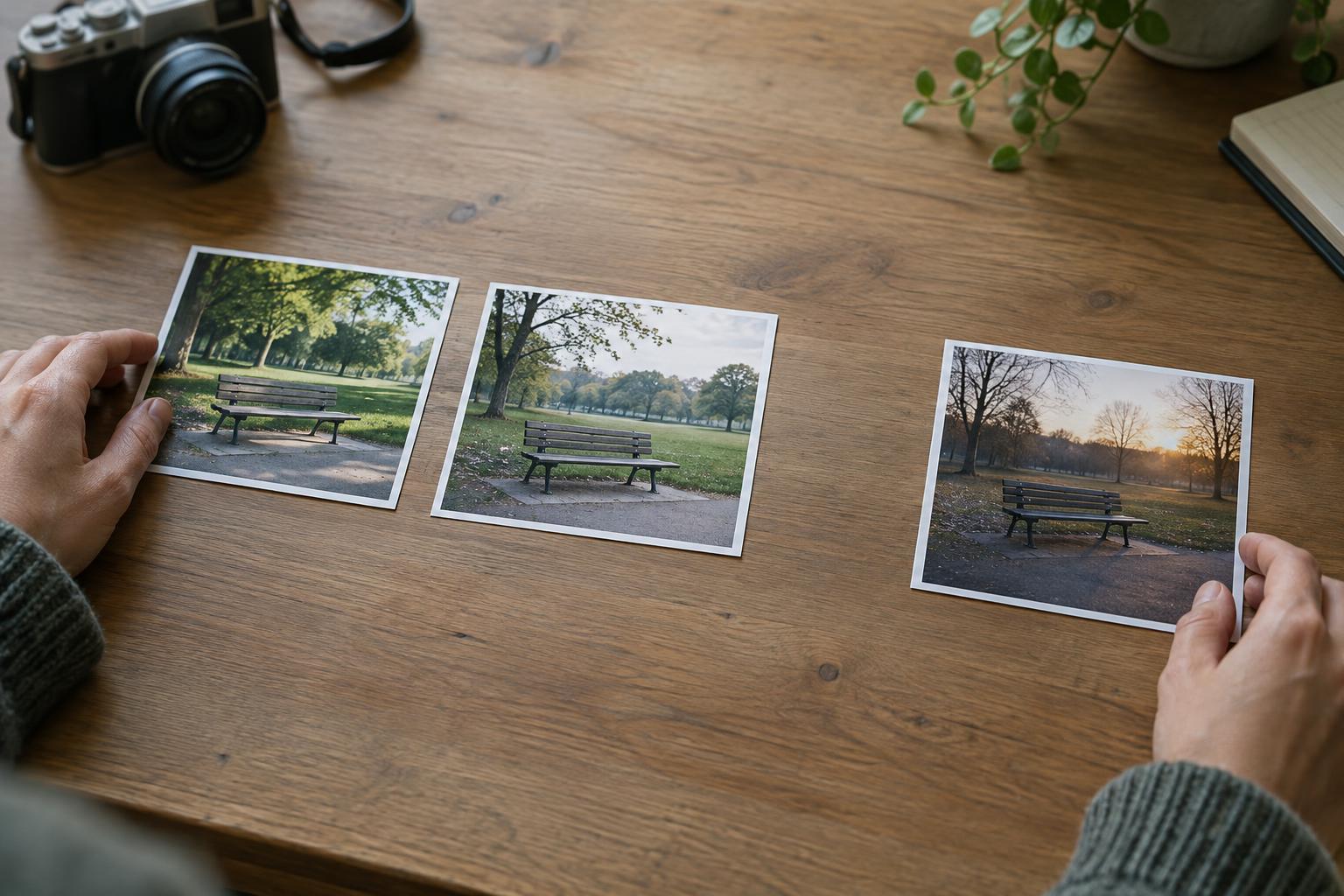
Visual literacy matters when shopping from images. A photograph records a selected angle under selected light; it cannot show every fold, thickness or wearing experience. A scarf photographed against a plain background may be easy to inspect but hard to picture with an outfit. A lifestyle image can show styling possibilities while making the scarf’s exact outline harder to see. Use both kinds of information for what they do well, and be cautious when an important detail remains out of view. Neither a beautiful image nor an appealing description should be mistaken for independent evidence of an unlisted property.
The same discipline applies to recommendations. It is reasonable to suggest comparing a wool category with a silk category for different styling aims; it is not reasonable to assume identical composition across them, or to promise how every item will feel. Check product-specific descriptions rather than relying on broad impressions, and separate what you observe from what you infer. In documentary storytelling, context protects an image from a misleading reading. Here, context includes measurements, materials, the clothes a scarf will meet and the practical setting in which it will be worn.
Make the final choice usable, not merely memorable
After narrowing a selection, ask three questions. Can you name at least two outfits you would wear it with? Do its shape and likely styling method suit your routine? Have you checked the available details that matter most to you, especially composition and dimensions? If one answer is uncertain, pause rather than letting a compelling picture decide for you. An accessory need not disappear into a wardrobe to earn its place; an adventurous colour can be a sound choice when you can see exactly how it will work with pieces you own.
Think of the result as editing rather than accumulating. A photographer removes distractions so the viewer can see the intended relationship between subject and setting. You can do something similar with clothing: choose a scarf that gives a familiar outfit a clearer focal point, a warmer layer or a new rhythm of colour. UniqueYou’s range of scarves, shawls, wraps and square scarves provides starting points for that exercise. The best selection is the one you understand well enough to wear beyond the moment in which you first saw it.
A regional guide to browsing UniqueYou
UniqueYou has 20 regional domains, 21 regional-language versions and 16 distinct languages. These figures differ because countries can share a language, while the United Arab Emirates has an Arabic root and a separate English /en version on the same domain. The destinations below identify each country and language so that a familiar-looking collection term is not mistaken for an English label. Use the relevant version to explore shapes or materials, then check the details of any individual item.
Poland — Polish
For Poland, the Polish-language home entry is https://uniqueyou.pl/. If a softer-looking winter layer interests you, the Polish cashmere-scarf category under the brand is UniqueYou; check each item’s composition. The Polish invitation to view the silk-scarf collection is — Zobacz kolekcję. Compare a square’s dimensions with the necklines you wear most.
Germany — German
For Germany, the German-language brand entry is UniqueYou. A lighter scarf can add colour without the visual volume of a broad wrap. The German invitation to discover that collection is — Kollektion entdecken. Look at worn and flat views to judge how much fabric will appear above your coat collar.
Czechia — Czech
For Czechia, the Czech-language brand entry is UniqueYou. A silk neck square is worth considering when a shirt or plain knit needs a small focal point rather than another large layer. The Czech invitation to view that collection is — Prohlédněte si kolekci. Check dimensions before planning a particular knot.
Spain — Spanish
For Spain, the Spanish-language home entry is https://uniqueyou.es/, and the brand’s wool-shawl category is UniqueYou. If your wardrobe is mostly solid-coloured, a leopard print may provide a deliberate contrast. The Spanish invitation to discover that collection is — Descubre la colección. Judge the print against your usual coat rather than against its photographed background.
France — French
For France, the French-language brand entry is UniqueYou. A scarf worn around the head or hair changes the balance of an outfit differently from one tucked into a neckline. The French invitation to discover that collection is — Découvrez la collection. Consider both the visible pattern after folding and the fastening method you find comfortable.
Hungary — Hungarian
For Hungary, the Hungarian-language brand entry is UniqueYou. Silk scarves can introduce a compact area of colour to tailoring or simple knitwear; the specific fibre content remains an item-level detail. The Hungarian invitation to view the collection is — Nézd meg a kollekciót. Compare prints at the scale at which you would actually wear them.
Italy — Italian
For Italy, the Italian-language brand entry is UniqueYou. Burgundy can bring depth to a neutral outfit, but its effect will depend on the particular shade and the colours already in your wardrobe. The Italian invitation to discover the burgundy-scarf collection is — Scopri la collezione. Test the idea mentally beside your most-worn coat.
Romania — Romanian
For Romania, the Romanian-language home entry is https://uniqueyou.ro/, while the brand’s head-and-hair-scarf category is UniqueYou. If you prefer a quieter accessory, consider how a black scarf would read against your outerwear. The Romanian invitation to discover that collection is — Descoperă colecția. Shape and texture still matter when the colour is familiar.
Slovakia — Slovak
For Slovakia, the Slovak-language brand entry is UniqueYou. A silk-scarf category offers a starting point for a smaller accent near the face or over a plain top. The Slovak invitation to view the collection is — Pozrite si kolekciu. Read the individual details rather than assuming a category name tells you everything about a particular piece.
Finland — Finnish
For Finland, the Finnish-language home entry is https://uniqueyou.fi/, and the brand’s merino-wool-scarf category is UniqueYou. The Finnish invitation to explore head-and-hair scarves is — Tutustu mallistoon. These are different styling directions: compare the coverage you want with the way you usually dress for time indoors and outdoors.
Sweden — Swedish
For Sweden, the Swedish-language home entry is https://uniqueyou-store.se/, and the brand’s silk-scarf category is UniqueYou. The Swedish invitation to view the cashmere-shawl collection is — Se kollektionen. A compact scarf and a broad shawl occupy very different areas of an outfit, so decide which shape answers a real wardrobe need first.
Denmark — Danish
For Denmark, the Danish-language home entry is https://uniqueyou.dk/, and the brand’s silk-neck-scarf category is UniqueYou. The Danish invitation to view shawls is — Se kollektionen. If your jackets have distinctive collars, picture where each shape would sit before choosing between a close neck accent and shoulder coverage.
Belgium — Dutch
For Belgium, this destination is in Dutch: its home entry is https://uniqueyou.be/, and the brand’s wool-scarf category is UniqueYou. The Dutch invitation to view stoles is — Bekijk de collectie. Compare the width and drape you would need over your usual layers, and verify the listed composition of any piece you consider.
Austria — German
For Austria, the German-language brand entry is UniqueYou. German is also used for the Germany destination, but these are separate regional versions. The German invitation to discover the wool-scarf collection here is — Kollektion entdecken. Let your coat’s neckline and the item’s dimensions guide how much volume to choose.
Netherlands — Dutch
For the Netherlands, the Dutch-language home entry is https://uniqueyou.nl/, and the brand’s broader scarf category is UniqueYou. The Dutch invitation to view beige scarves is — Bekijk de collectie. Compare beige shades with the warmth or coolness of your familiar clothes; a neutral can either connect an outfit or create a noticeable contrast.
United States — English
For the United States, the English-language brand entry is UniqueYou. A red scarf can become the clearest point of attention against restrained outerwear. The English invitation to the red-scarf collection is — Explore the collection. Consider whether you want that colour beside your face or as a longer line over a coat.
United Arab Emirates — Arabic
For the United Arab Emirates, this is the Arabic-language root entry: https://uniqueyou.ae/. Its separate English version is listed below. The Arabic invitation to explore the wool-scarf collection is — اكتشفي المجموعة. If you are comparing coverage and drape, use the individual item details as well as the styled images.
United Arab Emirates — English
For the United Arab Emirates, the English-language version sits at /en, and its brand entry is UniqueYou. It shares a regional domain with the Arabic root but is a distinct language version. Begin with the shape you intend to wear, then compare item descriptions rather than assuming the two language paths represent different products.
Ireland — English
For Ireland, the English-language home entry is https://uniqueyou.ie/, and the brand’s square-scarf category is UniqueYou. The English invitation to explore wool scarves is — Explore the collection. A square and a longer wool scarf answer different styling questions; check measurements and composition before deciding which fits your routine.
United Kingdom — English
For the United Kingdom, the English-language brand entry is UniqueYou. The English invitation to explore the wider scarf collection is — Explore the collection. Start with an outfit you already repeat and compare shapes within that collection; a persuasive photograph is most useful when you can imagine wearing its subject yourself.
Portugal — Portuguese
For Portugal, the Portuguese-language brand entry is UniqueYou. If a cashmere category interests you, look beyond the name to the specific item’s composition and dimensions. The Portuguese invitation to discover that collection is — Descubra a coleção. Consider whether its likely volume suits your most-worn outer layer.
A scarf is a small addition with a visible effect. Choose one by looking closely, checking what the image leaves unanswered, and giving your existing wardrobe the final say.
 Media Literacy