Separate the photograph from the claim
A real photograph is evidence that a camera recorded a scene, not automatic proof of every statement attached to that scene. An image of a crowded street, for example, might be shared with a caption naming a particular event, place and day. The people and street may be real while the caption is mistaken or misleading. Before deciding whether to share it, write down the specific claim you are being asked to accept.
Break that claim into parts: What does the caption say happened? Where and when does it say the photograph was taken? Who or what does it identify? Does it claim the image represents an entire event rather than one moment? This distinction keeps the task manageable. You may be able to confirm that an image appeared years earlier without knowing every detail of its original setting. That is enough to question a caption that presents it as a new photograph.
Look for an earlier or more complete version
Start by checking the post itself. Is the photographer, publication or original upload named? Does a link lead to the image in its original setting, or merely to another account repeating the same caption? A screenshot of a screenshot can hide useful information, including a fuller caption, the edges of the frame or a note explaining what the image actually shows.
An image search can help locate earlier appearances or visually similar versions. Try searching with the whole picture and, when useful, with a distinctive part of it. Compare results carefully: a matching building, sign or arrangement of people is more informative than a broadly similar scene. The earliest result you find is not necessarily the original source, and a search that returns nothing does not establish that the shared caption is true. Treat search results as leads to examine, not a verdict.
Test the proposed time and place
Read any credible source page you find in full rather than relying on its search preview. A caption may identify when the image was made, while the page’s publication date tells you only when that page appeared. An archive may also have added an image long after it was taken. If multiple sources give different dates or locations, note the disagreement instead of selecting the version that fits your expectations.
Details within a frame can offer clues: a street sign, shopfront, landscape feature, uniform or visible weather condition may help you compare the photo with a proposed location or occasion. These clues rarely settle the question alone. Signs can change, clothing can recur, and weather can look alike in many places. Camera metadata may contain a time or location, but it can be absent, altered or based on an incorrectly set device. Use such details to test a claim alongside source information, not as standalone proof.
Check whether the image supports the caption’s conclusion
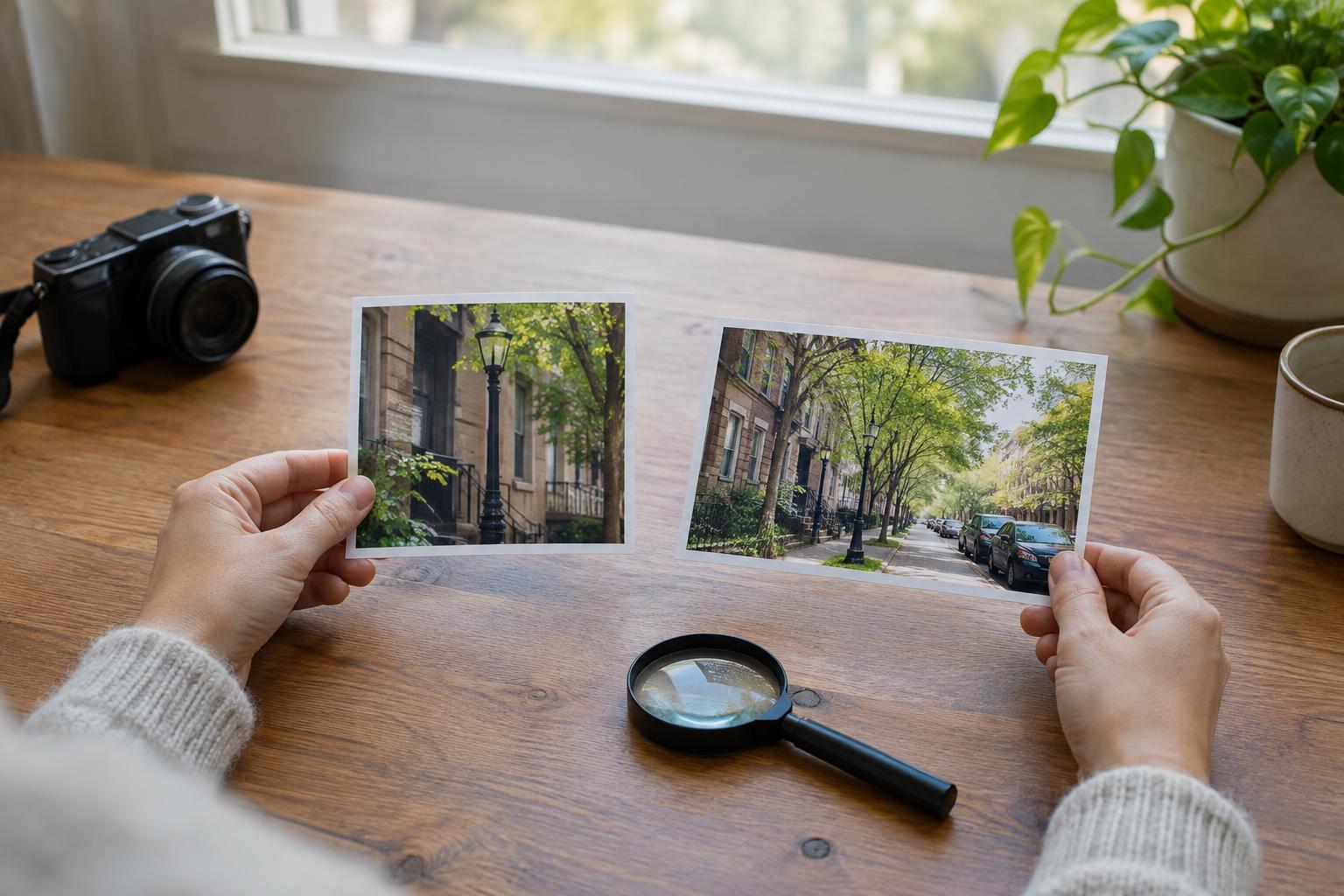
Even a correctly dated and located photograph may be asked to prove too much. A frame showing a line of people does not, by itself, establish why they are waiting or how many people attended an event overall. A tightly cropped image may exclude nearby details that change its meaning. Look for a wider frame, a sequence from the same photographer or a fuller account of the setting when those are available.
Pay close attention to language that turns an observation into an inference. “The photo shows smoke above a building” describes visible content; a claim about the cause of the smoke requires additional evidence. The same applies to claims about people’s motives or identities. Your aim is not to distrust every image, but to distinguish what you can see, what a source documents and what a sharer has assumed.
Share only what you can support
At the end of a check, make a proportionate judgment. You might find that the image clearly predates the event named in a post, that its source supports the caption, or that its origin remains uncertain. Say which part you can verify and which part you cannot. “I found an earlier use of this image with a different location” is more useful than declaring the entire photograph fake when the photograph itself appears genuine.
If you cannot establish the context, avoid reposting the image with an unqualified caption. You can ask for the original source or share a cautious description instead. Be especially careful when a mistaken identification could expose or harm someone pictured. A pause before sharing preserves an important distinction: photographs can be valuable records of real moments, but their meaning depends on accurate context.