Decide what the reflection is doing
A reflection is more than a duplicate of what sits in front of a camera. It can show something outside the frame, place two subjects beside each other or turn a familiar scene into an arrangement of shapes. Before making the photograph, decide which of those roles matters. Is the reflected subject the main subject, or does it add context to something seen directly? A clear answer makes it easier to choose what to include.
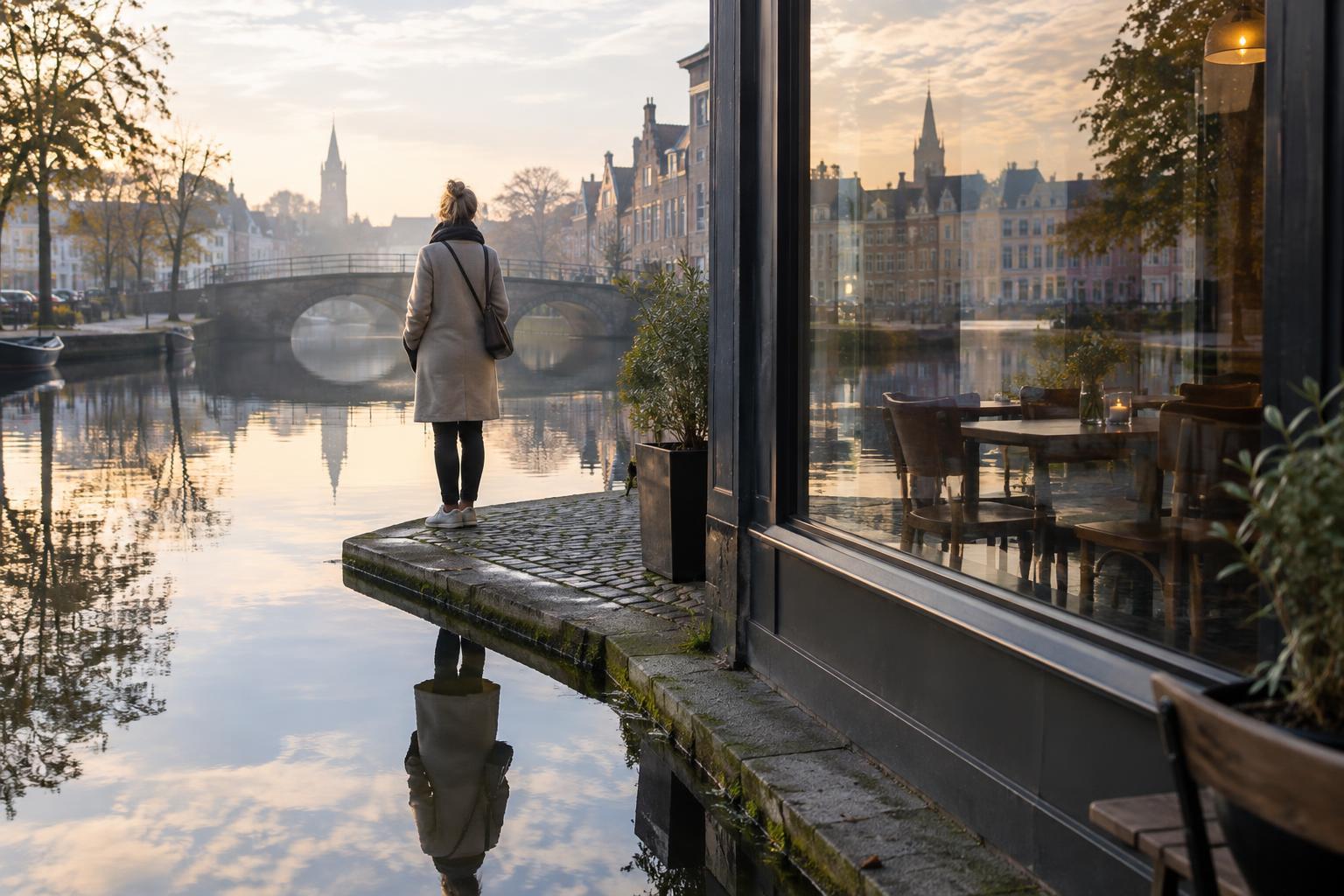
Try describing the picture in one sentence: a person framed by their reflection, a building repeated in a puddle or a street scene layered over the view through a window. If the sentence requires explaining several unrelated details, the frame may be trying to do too much. Move closer, change position or wait until fewer elements compete for attention.
Move to control the layers
Small changes in camera position can make a large difference when photographing reflective surfaces. In a mirror, shifting left or right changes what appears behind the camera and how it lines up with objects around the mirror. At a window, the same movement can separate a reflected face from a bright sign or place it against a quieter area. Check the edges of the frame as well as its center: an unwanted reflected object can slip in without being obvious at first.
Windows often show both a reflection on the glass and a view through it. If you want one layer to dominate, look for a position where the other is less visually busy. If you want both, give each a recognizable part of the frame. A reflected tree over a room interior, for example, is easier to read when its branches do not cover every important object inside.
Water adds another choice because its surface changes. Still water may produce a recognizable inverted scene, while ripples break that scene into colors and fragments. Neither result is inherently better. For a recognizable reflection, wait for a calmer moment and keep the reflected subject clear. For a more abstract picture, pay attention to the pattern of light and dark shapes rather than the identity of every object.
Watch the light and set exposure deliberately
Reflections can vary greatly in brightness. A pale sky reflected in a window may sit beside a dim interior; sunlight on water may produce bright highlights among darker areas. Look at the parts you most want the viewer to see, then set exposure for those parts. If the brightest details matter, reduce exposure until they retain visible variation. If the darker subject matters more, accepting a bright, nearly featureless area may be a reasonable compositional choice.
Light also affects whether glass reads primarily as a reflection or as a view through to what lies beyond. Try changing your position or the lighting around the scene before relying on editing. When photographing through a window, placing the camera close to the glass may reduce unwanted reflections from your side, though it can also remove a layer you wanted to keep. Review a test frame and decide whether the result supports your intended subject.
Focus deserves a separate check. A camera may focus on a mark on the glass when you intended to show the reflected scene, or on the distant view when you wanted a sharply rendered surface. Magnify a test image if your camera allows it. Deliberately choosing which layer appears sharp helps viewers understand where to look.
Keep the result legible and honest
A reflection can create an apparent connection between people or places that were not directly beside each other. That can be visually compelling, but it can also be misleading when the photograph is presented as a straightforward record. If context matters, consider including enough of the reflective surface or surrounding scene to show how the image was made. Avoid using a clever alignment to imply an event or relationship the scene does not establish.
During editing, start with a crop that makes the subject and its reflection easy to distinguish. Adjust brightness and color to clarify the layers, but be cautious about making the reflected scene look more distinct than it appeared in the original capture, especially in documentary work. The strongest reflection photographs do not have to be perfectly symmetrical or technically spotless. They give the viewer a reason to look at both the surface and the scene it reveals.