Begin before you raise the camera
A documentary photograph can show a moment, but it cannot show everything a person knows about their own life. That gap makes trust essential. Before asking to photograph someone, be ready to explain what interests you about the subject, what kind of story you hope to tell and why you want to make pictures. A clear, ordinary explanation is more useful than a grand promise about giving someone a voice.
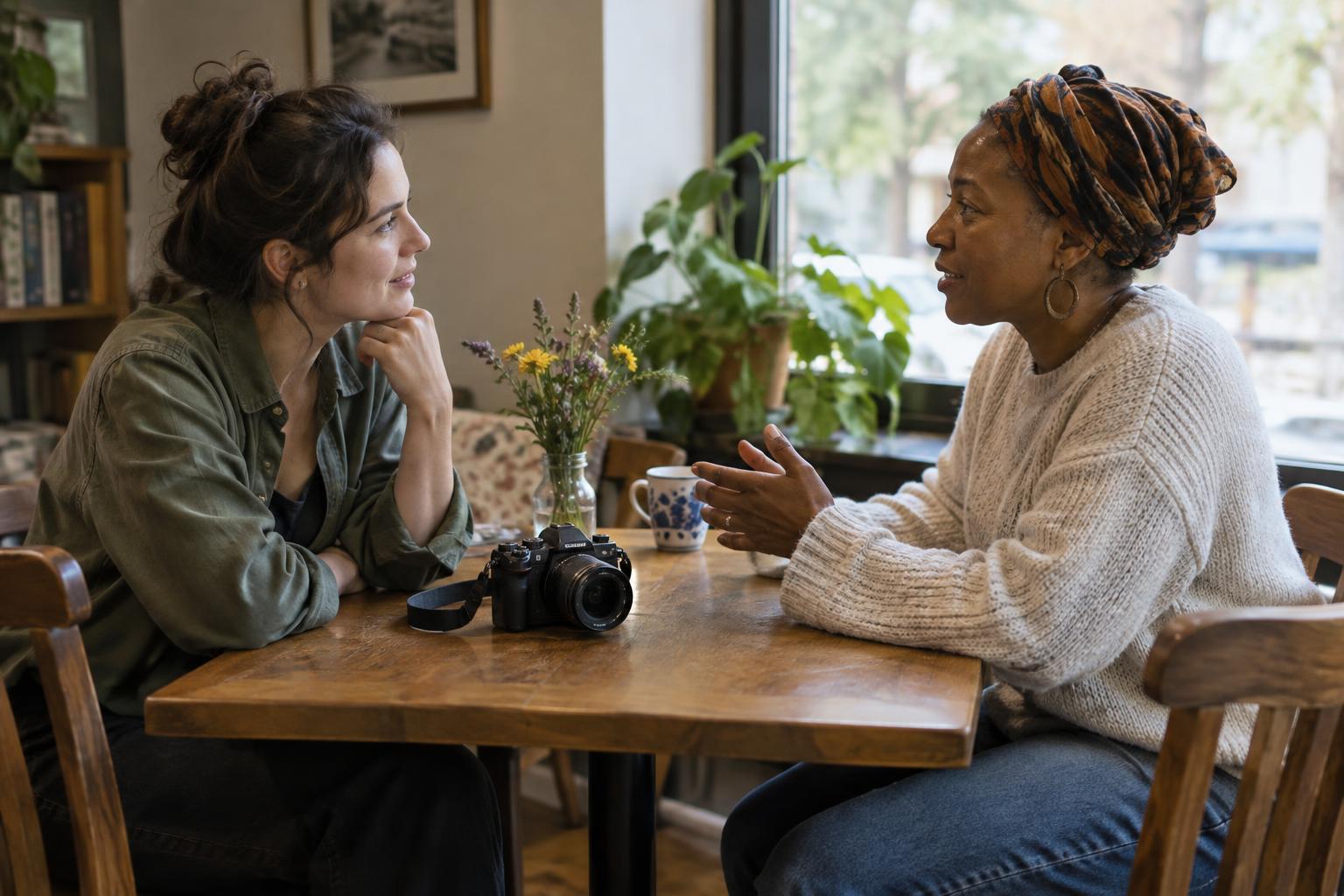
Approach at a time when the person can reasonably choose whether to talk. Introduce yourself, ask whether they have a moment and pay attention to signs that you are interrupting work, rest or a difficult experience. If the answer is no, accept it without asking for a justification. Someone who agrees to a conversation has not necessarily agreed to be photographed; treat those as separate decisions.
Make the proposed use understandable
People cannot make an informed choice if they do not know what they are being asked to join. Explain, in plain language, whether you are making a personal project, a publication piece or images for an organization. Describe where the photographs may appear, including a website, social media or an exhibition if those are realistic possibilities. If you do not yet know where the work will appear, say so rather than implying a narrower use.
Be equally clear about what you cannot promise. You may be able to offer a chance to discuss captions or identify factual mistakes, but that is different from promising approval of every image or final editorial control. Do not offer anonymity if a face, home, workplace or other detail could make someone recognizable. If a person sets a condition you cannot honor, pause rather than quietly accepting it and proceeding anyway.
Let participation remain a choice
Trust is tested during the time you spend photographing, not only when you first ask permission. Check in when the situation changes: a new person enters, a private conversation begins or you want to move into a different space. A yes to portraits outdoors is not automatically a yes to photographing inside someone’s home. When possible, give people room to stop, take a break or decline a particular scene without having to manage your disappointment.
Consider the pressure your presence may create. A person may feel obliged to agree because you were introduced by a relative, employer, teacher or community leader. Be especially careful when photographing children or people in distress. Permission from someone with authority may be necessary, but it does not replace attention to the subject’s comfort and safety. If you are unsure whether making a frame would cause harm or exploit a vulnerable moment, you can put the camera down.
Photograph with context, not just access
Being welcomed into a setting does not guarantee that every compelling image tells a fair story. A gesture caught between expressions, a crowded room photographed without context or a moment of frustration may suggest something the wider experience does not support. Observe beyond the most dramatic instant. Ask questions when appropriate, take notes on names and circumstances, and distinguish what you witnessed from what you inferred.
Avoid treating trust as a way to obtain more intimate pictures. You can make a strong visual account through routine, relationships, surroundings and quieter moments. During editing, look at the sequence as a whole: does it reduce a person to one hardship, or allow space for their actions and complexity? Captions should add verified context without claiming to know someone’s private thoughts. Respectful interpretation is part of the work, not an obstacle to it.
Follow through after the photographs
Before leaving, confirm how the person can reach you and how you can reach them if more context is needed. Keep any specific commitments you make, such as sending a link or a copy of a finished piece. If plans change in a way that affects the promised use, revisit the conversation where feasible. Clear records of what was discussed can help you avoid relying on memory months later.
You cannot guarantee that everyone will like the finished work, and disagreement does not automatically mean the work was unfair. Still, listen carefully if someone points out an error or an unforeseen risk. Correct what you can, explain decisions honestly and consider whether a future image should be used differently. Trust is not a release form or a single friendly exchange. It is a practice of giving people accurate information, meaningful choices and consistent respect throughout the story.