Why a field log matters
A photograph records a view of a moment, not everything that made the moment understandable. Later, it may be difficult to recall why you stood in one place, what happened just before you pressed the shutter, or whether an apparently quiet scene was typical of the day. A field log gives those details somewhere to live while they are still fresh. It can support more careful editing and help you recognize where your photographs leave important gaps.
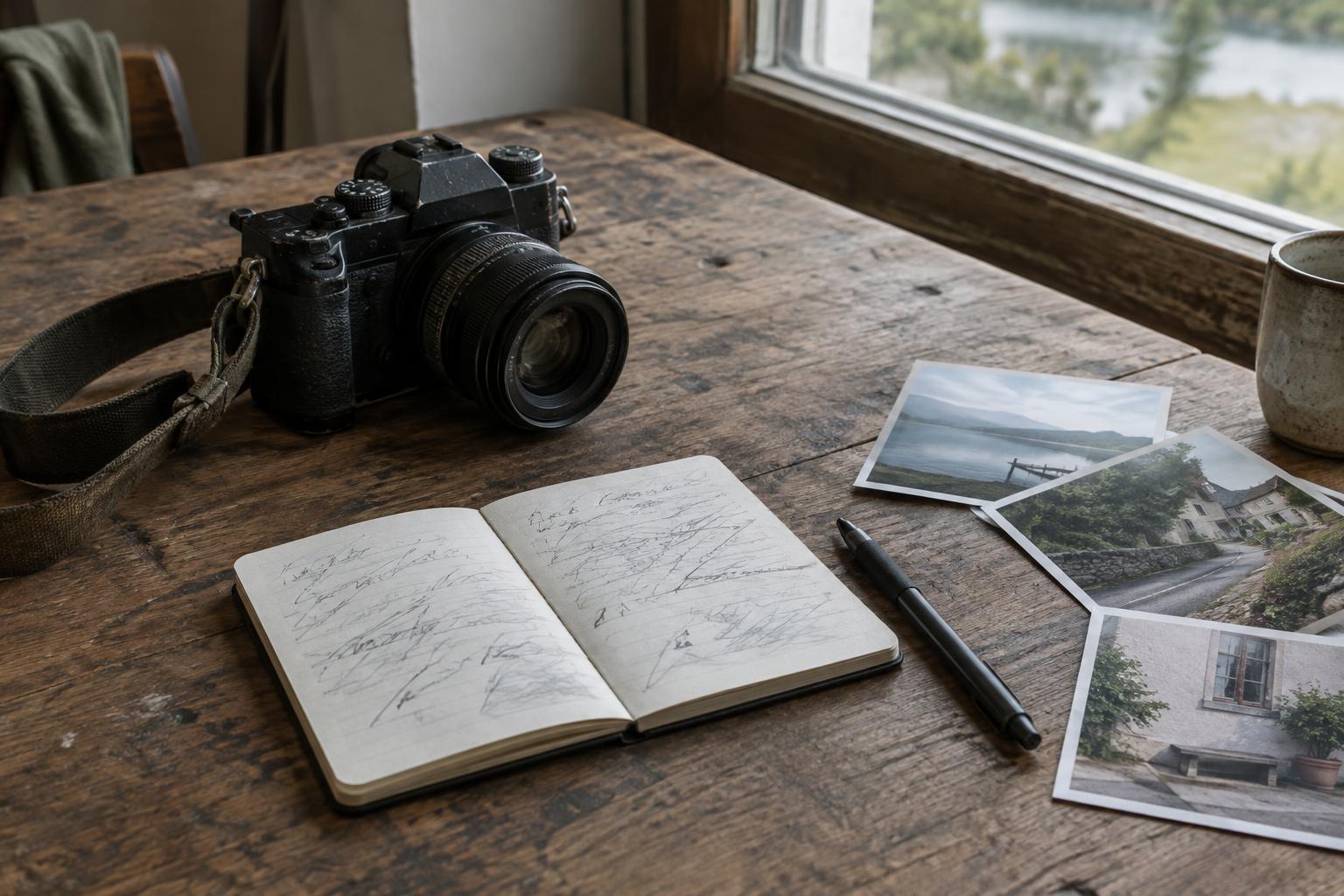
The log need not be elaborate. A notebook, a text document or a voice memo you transcribe later can work. Choose a method you will actually use, and keep it separate from the image files so you can write freely without treating every note as a finished caption. For more ideas on developing a documentary project, browse Documentary Storytelling · Scotland on Film.
Record what happened, then what you think it means
A useful entry separates direct observation from interpretation. You might write, “Three people left the room after the meeting began,” rather than “The meeting failed to hold people’s interest.” The first describes something you saw; the second proposes a reason you may not know. If an interpretation feels important, label it as a question to investigate rather than a fact to publish.
Include details that a frame cannot convey: the sequence of events, sounds that drew your attention, interruptions, and activity outside the edge of the photograph. Note how long you observed, especially if you photographed only a brief part of a longer event. These notes will not turn an image into a complete account, but they can warn you against presenting an isolated moment as the whole story.
Make your photographic choices visible to yourself
Documentary photographs are shaped by access and decisions. In your log, record whether you were invited into a space, stayed at its edge or had to leave early. Note when you chose a close view over a wider one, waited for an activity to develop, or put the camera down. The purpose is not to justify every choice. It is to understand how those choices affected what a future viewer could see.
Keep a short list of what you did not photograph and why. Perhaps a person declined, the light made an activity difficult to show, or you arrived after an important part of the day. Avoid filling those gaps with guesses when you edit. If the missing information is essential, you may need another visit, a clearly limited description or a narrower story.
Track questions without turning people into assignments
At the end of a session, write down a few questions raised by the images. Does a busy afternoon reflect the place’s usual rhythm? Did a visible disagreement have a longer history? Are you repeatedly photographing one group while overlooking others? Such questions can guide listening and observation on a later visit. They should not become a script for what you expect people to do.
Treat private or sensitive information carefully. A working log may contain contact details, tentative impressions or requests about how someone wishes to be photographed. Store it with appropriate care, and distinguish those notes from information intended for publication. If someone tells you something you cannot independently establish, record who said it and the circumstances rather than converting it into an unqualified claim. For broader browsing on visual storytelling, visit Scotland on Film.
Use the log when you edit, not just when you shoot
Before selecting a final sequence, compare your strongest images with your notes. Ask whether a dramatic frame represents a recurring pattern or an unusual instant. Check whether the order of photographs suggests a timeline that did not occur. A log can also remind you that a compelling photograph came from a short visit, while quieter images reflect time spent observing the setting more fully.
Finally, mark what has been checked and what remains uncertain. A useful entry might say “observed,” “told to me,” “needs confirmation” or “not for publication.” This small habit makes it easier to write restrained captions and explain the limits of your access. The field log is not proof that a story is complete; it is a practical record of how you came to see it and what you still do not know.