Start with what the photo actually shows
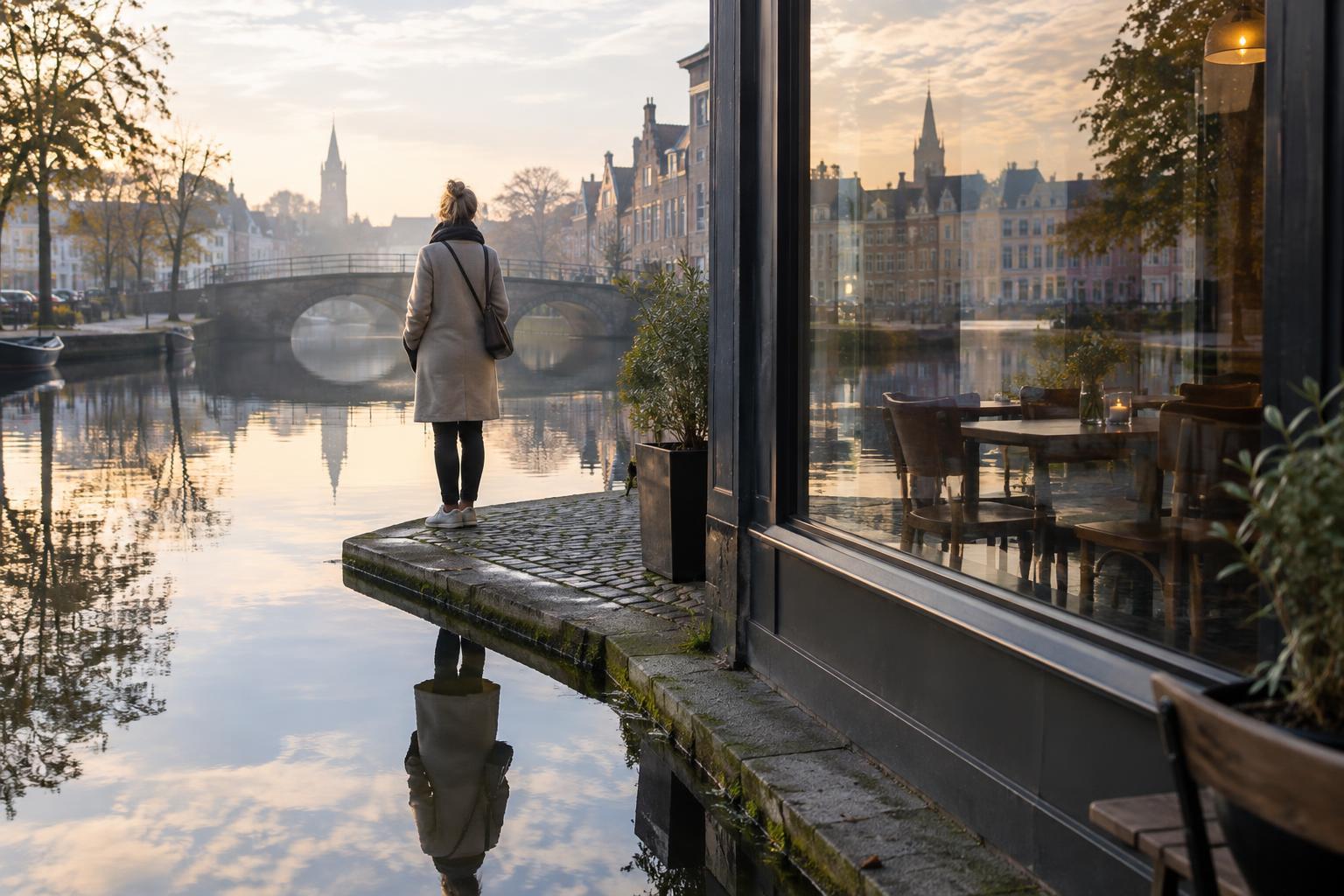
A location claim can change how people understand a photograph. Before accepting a caption or a social media post, separate the claim from the visible evidence. Write down the proposed place, then list features you can see without interpreting them: the shape of a roof, the number of road lanes, a bend in a river, a hill behind a building or the position of a sign. This keeps an attractive guess from becoming the starting assumption.
Look for details that may be distinctive in combination rather than relying on one striking object. A tower may resemble towers in many cities; a tower beside a curved street, a pedestrian bridge and a particular slope is a narrower match. Notice what the frame does not show, too. A tight crop may hide the junction or skyline that would make the location easier to test.
Find candidate places on the right kind of map
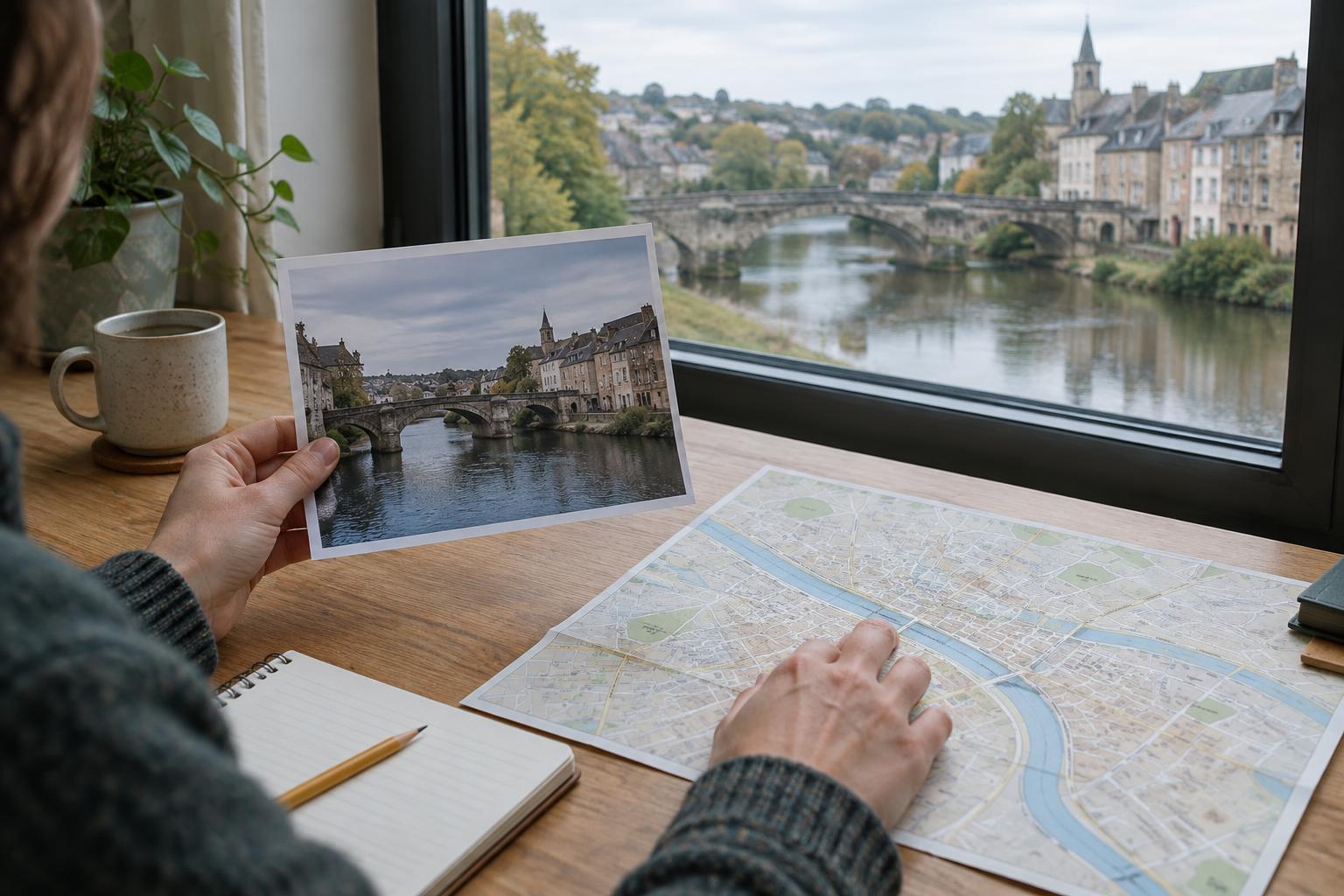
Use the strongest visible clue to narrow your search. A named landmark may lead to an area quickly, while a coastline, mountain outline or road pattern may be more useful when signs are absent. Compare several map views when available: a standard map for street layout, satellite imagery for building footprints and terrain, and ground-level imagery for the appearance of facades and intersections. Each view answers a different question.
Treat a search result as a candidate, not a conclusion. Place names can be repeated, and map labels may refer to a wider area than the exact spot in the image. If a sign is readable, consider whether it names the place photographed, points toward another place or belongs to a business that could have moved. Record alternative candidates rather than discarding them as soon as one looks promising.
Test the camera position and sightlines
Once you have a candidate area, work backward from the visible arrangement of objects. If a tower appears to the left of a bridge in the photo, locate both on the map and identify positions from which they would appear in that order. Then check nearer features: does the road curve the right way, and should a building or row of trees stand between the camera and the tower? Matching the relative positions of several features is more persuasive than matching a single facade.
Perspective can make this harder than it sounds. A long lens can make distant objects appear close together, while a wide-angle view can exaggerate the space between nearby objects. Camera height, a photograph taken from a vehicle or an image cropped after capture can also change the apparent view. You do not need to reproduce the frame perfectly, but major contradictions deserve investigation. If the proposed camera position puts a visible landmark behind the photographer, the match is probably wrong.
Check changes and misleading clues
Maps and photographs may represent different moments. Construction, demolition, seasonal foliage and temporary signs can explain a mismatch. Ground-level imagery may cover only selected streets or show an older view. When an image seems close but not exact, ask whether the difference is something that could reasonably change or a fixed feature, such as the course of a road. Do not use an imagined renovation to explain away every contradiction.
Image files sometimes contain location metadata, but it may be absent, stripped during sharing or attached to a copied or edited file. Treat it as another clue to check against visible geography, not automatic proof. Likewise, text overlaid on an image or a location tag supplied by a poster tells you what someone claims, not necessarily where the camera stood. A reversed image can also confuse left-right comparisons, so check signs or other asymmetric details if the map seems unexpectedly mirrored.
State the conclusion at the strength of the evidence
A useful location check ends with a clear account of what matches, what does not and how precise the result is. Several independent landmarks and a plausible camera position may support a specific viewpoint. A matching skyline without a confirmed viewpoint may support only a neighborhood or city. If two places remain plausible, say so. The goal is not to force a pin onto a map; it is to make the reasoning inspectable.
Location is only one part of verification. Even a strong geographic match does not establish when a photo was made, who made it or whether its caption accurately describes the event shown. Consider privacy as well: identifying the exact location of a private home or a vulnerable person may create risks unrelated to the image’s meaning. Share the level of detail needed to assess the claim, and keep the limits of the evidence visible.