Start with a safe, complete view of the shoot
Culling is the process of narrowing a shoot to the photographs worth editing, delivering, or keeping close at hand. Before you remove anything, copy the files to an organized folder and confirm that your backup is usable. Keep the originals intact while you make selections. Ratings, flags, or a separate selects collection let you change your mind without relying on irreversible deletions.
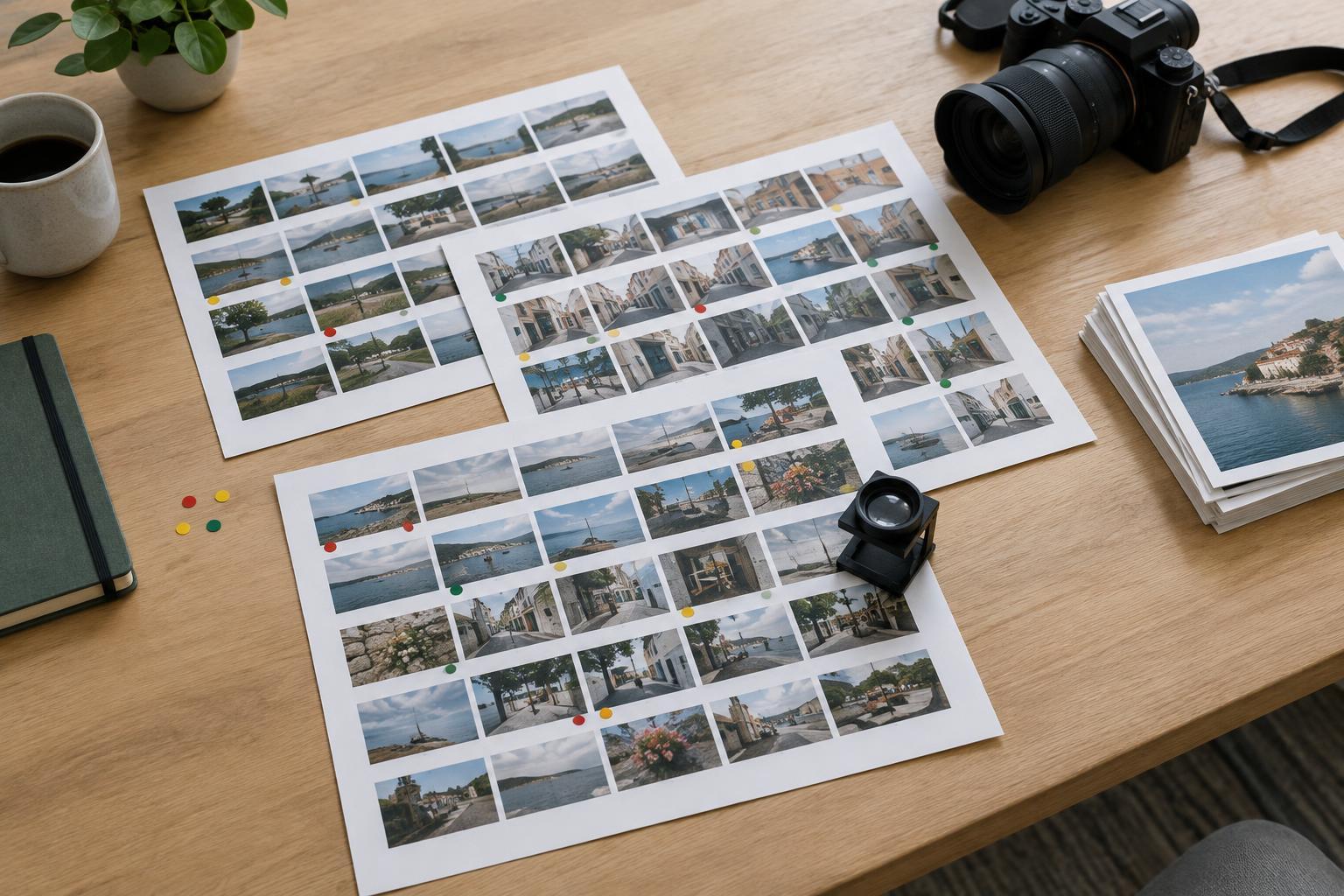
Next, generate a contact sheet: a grid of thumbnails that shows many images at once, ideally with filenames visible. You can use an editing application, a file browser, or a printed sheet. Arrange the images in capture order for a documentary sequence, or group them by scene or setup when that makes comparison easier. At this stage, you are trying to understand the shape of the shoot, not inspect every pixel.
Set criteria before choosing favorites
Write down what the photographs need to accomplish. A portrait commission might call for a clear expression and enough space for a planned layout. A visual story might need an establishing view, telling details, action, and a sense of transition. Defining the purpose first helps you avoid picking only the most dramatic frames while overlooking quieter images that make the set understandable.
Use the same questions for each candidate: Is the subject or moment clear? Does the framing direct attention where it should? Is the exposure and focus suitable for the intended use? Does this image contribute something the other selections do not? Technical perfection is not the only standard. Intentional blur, grain, or unusual framing may serve an image well; an accidental flaw matters most when it interferes with what the photograph needs to communicate.
Make separate passes for separate decisions
On the first pass, scan the contact sheet quickly. Mark promising frames and obvious problems, but leave uncertain images unmarked rather than forcing a decision. Look for clusters of near-duplicates, gaps in coverage, and moments that stand out. A simple flag or yes/maybe/no system is often enough. Save detailed comparisons for later, when the field is smaller.
On the second pass, compare similar frames side by side. For each burst or repeated setup, look at gesture, expression, background distractions, and the relationship between subjects. Choose a lead frame and retain an alternative only when it offers a meaningful difference, such as a distinct moment or a more useful crop. Zoom in when focus, motion, or small visual distractions could change the decision. A thumbnail tells you what attracts attention; it cannot reliably settle every technical question.
On the third pass, view the reduced set as a whole. Remove images that repeat an idea without improving it, and reconsider useful frames you initially passed over. If you are culling for a story, ask whether a viewer can follow the subject, place, or action without your explanation. If you are culling for delivery, check that the set meets the intended brief rather than simply reflecting your personal favorites.
Keep the workflow consistent and reversible
Choose a small rating system you can apply without stopping to debate every image. For example, a flag can mean “review again,” a higher rating can mean “likely select,” and a final collection can hold approved images. The exact labels matter less than using them consistently. Record any delivery requirements, such as orientation or space for text, so those practical needs do not get lost during an aesthetic review.
Avoid heavy editing before the shortlist is stable. Minor exposure or color adjustments can help you judge a promising frame, but fully retouching many near-duplicates wastes effort and may make you reluctant to cut them. Work non-destructively when possible, preserve filenames or another reliable link to the originals, and keep rejected files until you are confident the project is complete. “Not selected” does not have to mean “deleted.”
Give the final selection a context check
Open the final set outside the contact-sheet grid and move through it in its intended order. Check pacing: a strong opening should orient the viewer, related images should build rather than repeat, and the ending should feel considered. Review captions or notes against what the photographs actually show. An image can be visually compelling yet create a misleading impression when it is separated from its context or placed next to an unrelated frame.
Before delivery, check the full-size files again for focus, edges, and export quality. Make sure the chosen versions correspond to your final selections and that any promised variety is present. A good cull is not a search for one perfect photograph. It is a repeatable way to find the images that work, understand why they work, and present them without making the viewer guess what matters.