Decide which date you are trying to find
A photograph can have several relevant dates: when the scene was exposed, when a print was made, when a negative or print was scanned, and when a file was shared. These dates may be far apart. A scan of an old family photograph, for example, might be a recently created digital file showing a scene from decades earlier. Before examining clues, define the question: are you dating the scene, the physical object, or the digital copy?
Record what you actually know about the image’s origin. An original camera file, a print with writing on the back, and a screenshot of a social media post offer different kinds of evidence. A caption or filename can be useful, but it is a claim to check rather than proof. If the image has been cropped, compressed or copied, clues that once appeared at its edges or in its file information may be missing.
Look for clues that set a boundary
Start with identifiable objects or changes in the scene. A building under construction, a particular sign design, a piece of equipment or a distinctive vehicle model may help establish the earliest plausible date. Such clues are strongest when you can verify independently when the feature first existed. A newer object can place a lower boundary on the date of a scene, but an older object rarely establishes an upper boundary: people continue to use old cars, clothes and furniture.
Clothing, hairstyles and photographic styles can suggest a broad period, not a precise year. Fashion varies by place and person, and images may depict costumes, reenactments or deliberately retro interiors. Even a dated poster in the frame needs careful reading. It may advertise a future event, remain posted long afterward, or have been placed there for the photograph. Ask what the clue rules out, rather than what era it reminds you of.
Use light and surroundings with caution
Natural light can narrow possibilities when the location and camera direction are known. The length and direction of shadows may offer clues about the sun’s position; seasonal vegetation, snow or weather may also help. None is a calendar by itself. A cold-looking day need not be winter, and a flowering tree can bloom at different times in different places. Artificial lighting, reflections and edited contrast can further complicate what you see.
Small environmental details sometimes help more than a dramatic subject. Storefront names, street layouts, construction work and landscape changes may provide context that can be checked against other dated material. First confirm that you have identified the place correctly. A similar-looking street or building in another location can make an otherwise careful timeline misleading. If you cannot establish the location, keep conclusions based on local seasons or changes tentative.
Check the image’s history, not just its pixels
If you have an original digital file, its metadata may include a camera date and time. That is worth examining, but camera clocks can be set incorrectly, reset or left in another time zone. Editing and sharing can also alter or remove metadata. A file creation date may describe when a copy was saved rather than when the shutter was pressed. Treat technical dates as one piece of evidence and note what type of file you inspected.
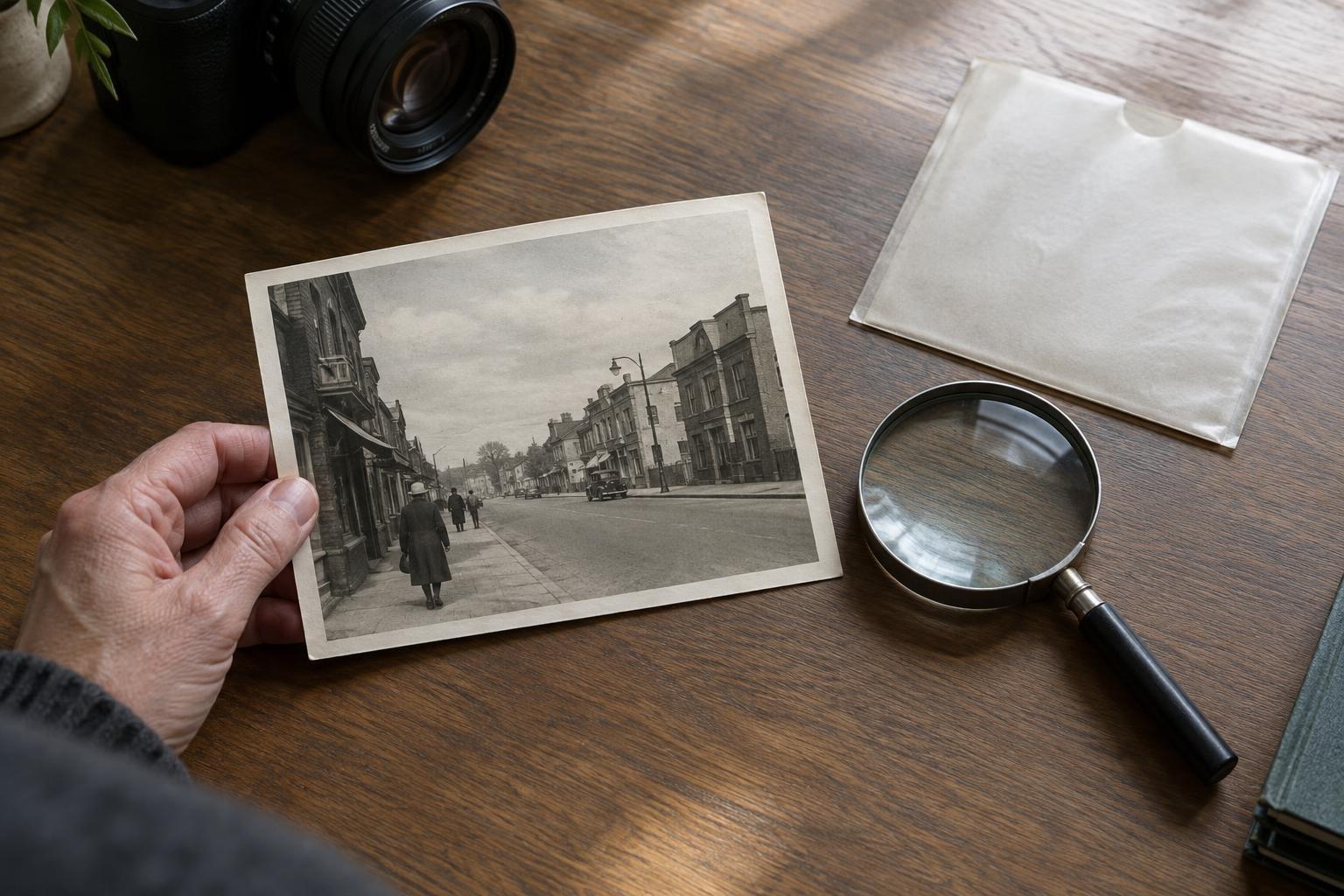
For a physical photograph, paper, borders, printing methods and annotations may help date the print. They do not necessarily date the pictured moment. Writing on the back might have been added years later, and an old negative can be printed again. Compare any physical clues with the scene itself and with information about how the photograph was stored or passed along. Keep those observations separate so a convincing date for the print is not mistaken for a date for the exposure.
Build an estimate you can explain
List each clue, what it suggests and a plausible alternative explanation. Separate direct evidence, such as a clearly readable date on an object, from interpretation, such as a style that looks typical of a decade. Then seek clues that do not depend on the same assumption. If a sign and a vehicle both appear to support a range, check whether either could have remained in use much longer. Conflicting clues are a reason to investigate, not to choose the most appealing answer.
State your conclusion at the precision the evidence supports: a season, a range of years, or simply before or after a known change. Explain any uncertainty in ordinary language. A useful estimate might say that the scene was photographed after a visible building was completed, while the file’s save date does not establish when the scene occurred. This approach makes the reasoning inspectable and leaves room to revise it when a better copy or stronger evidence appears.