Decide what the images can reasonably represent
A representative set of images gives viewers a fair sense of what the photographer observed. It does not have to show everything, and it cannot stand in for events the photographer did not witness. Before editing, write a one-sentence description of the assignment’s scope: the place, activity, period of observation, and people or situations you had access to. This boundary is the starting point for an honest edit.
Be especially careful with broad conclusions. Photographs from one visit may illustrate a particular encounter, but they cannot by themselves establish what usually happens at that location. If access was limited to a public area, a single shift, or people who agreed to be photographed, keep that limitation in mind when choosing images and writing captions. A strong image can be truthful as a record of one moment while still giving a misleading impression if presented as typical.
Make a broad first pass before choosing favorites
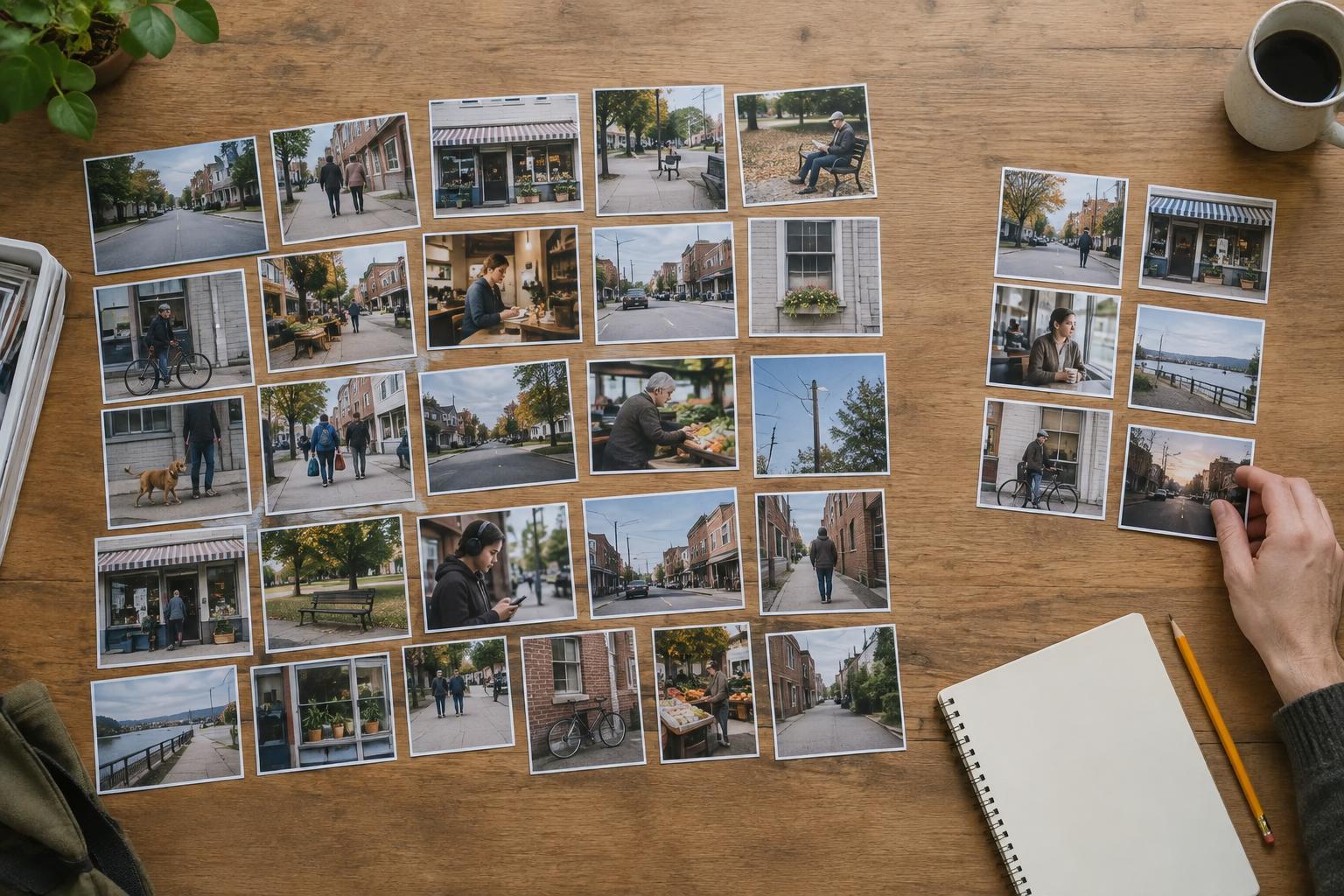
Start by reviewing the full take, including quiet frames and pictures that complicate your initial impression. Remove unusable files for technical reasons, but avoid building the story immediately around the most dramatic images. A contact sheet or similar overview makes it easier to see recurring scenes, changes over time, and situations you photographed only briefly.
Sort the remaining images by what they contribute rather than by visual impact alone. Useful groups might include setting, routine activity, interaction, interruption, detail, and aftermath. Note who appears often, who appears only once, and which parts of the activity you missed. You are not trying to give every category equal space. You are checking whether your favorite frames have crowded out information a viewer would need to understand the subject.
Keep a short record of consequential editorial choices. If you exclude a striking photograph because its timing makes a rare incident look routine, that is worth remembering. If you have only one image of an important stage of the story, note that weakness rather than asking the picture to carry more meaning than it can.
Test the edit for misleading patterns
Lay out a provisional sequence and ask what a viewer who was not there might infer. Does every image show conflict even though most of your observed time was calm? Are expressions from a split second being used to imply a lasting attitude? Does a tight crop remove nearby people or objects that change the meaning of an action? These questions do not mean you must suppress difficult moments. They help distinguish a significant moment from an edit that exaggerates its prevalence.
Look for meaningful counterexamples within the material you actually have. A quieter frame may show how people normally use a space; a wider view may clarify scale; a later frame may show what happened after an apparent confrontation. Include such images when they improve understanding, not merely to create an artificial balance. Conversely, do not add an image that suggests a reassuring conclusion if the photographed evidence does not support one.
Try describing the edit aloud without referring to your intentions. If the visible sequence supports a narrower statement than your proposed story, narrow the story. Another reader can help by explaining what they think happened and which images led them there. Treat surprising interpretations as a prompt to revisit the selection, order, or captions.
Use sequence and captions to make context visible
An image’s meaning changes beside other images. An opening frame can establish a setting; a wider shot can orient the viewer before close details; a later frame can clarify whether an event continued or ended. Sequence should follow a defensible logic, such as the order observed or a clearly thematic structure. Avoid implying a chronology that did not occur simply because it makes a smoother narrative.
Captions can supply facts a photograph cannot establish on its own, but they should not invent motives or internal states. Identify what is known, distinguish observation from interpretation, and explain a relevant limitation when the image might otherwise be overread. If a frame comes from a different time or location than its neighbors, make that clear. A caption is not a repair for a fundamentally misleading selection; it works best when the pictures and words tell a compatible story.
Finish with an accuracy and care check
Before publishing, compare the final edit with the full set again. Ask whether the chosen images reflect the range of situations you observed, whether any omission changes the central meaning, and whether the framing supports the claims in the headline and introduction. Check for near-duplicates that repeatedly reinforce one impression without adding information. When the available pictures cannot support an important point, acknowledge the gap rather than filling it with a suggestive image.
Accuracy also involves how people are portrayed. Consider whether a photograph exposes someone to unnecessary harm, especially in a vulnerable moment, and whether a less intrusive frame can communicate the same relevant information. Responsible selection is not a formula for choosing a fixed proportion of calm and dramatic pictures. It is a repeatable practice: define the limits of observation, examine the whole take, challenge the story your favorites seem to tell, and give viewers enough context to interpret what they see.