Read the light before moving the subject
Outdoor light is more than a question of whether the day is sunny. A person standing under a tree, beside a building or in an open field may receive light from different directions, even within a few steps. Before choosing a spot, look at the subject’s face or most important detail. Are shadows soft or sharply defined? Is the background brighter than the subject? Does the light help you see the shape and texture you want to show?
Two useful starting points are direct sun and open shade. Direct sun reaches the subject without a nearby object blocking it. Open shade is a shaded area that still has a broad view of the bright sky, such as the edge of a building’s shadow. Neither is automatically better. The choice depends on the subject, the background and the feeling you want the image to carry.
Use open shade for gentle detail
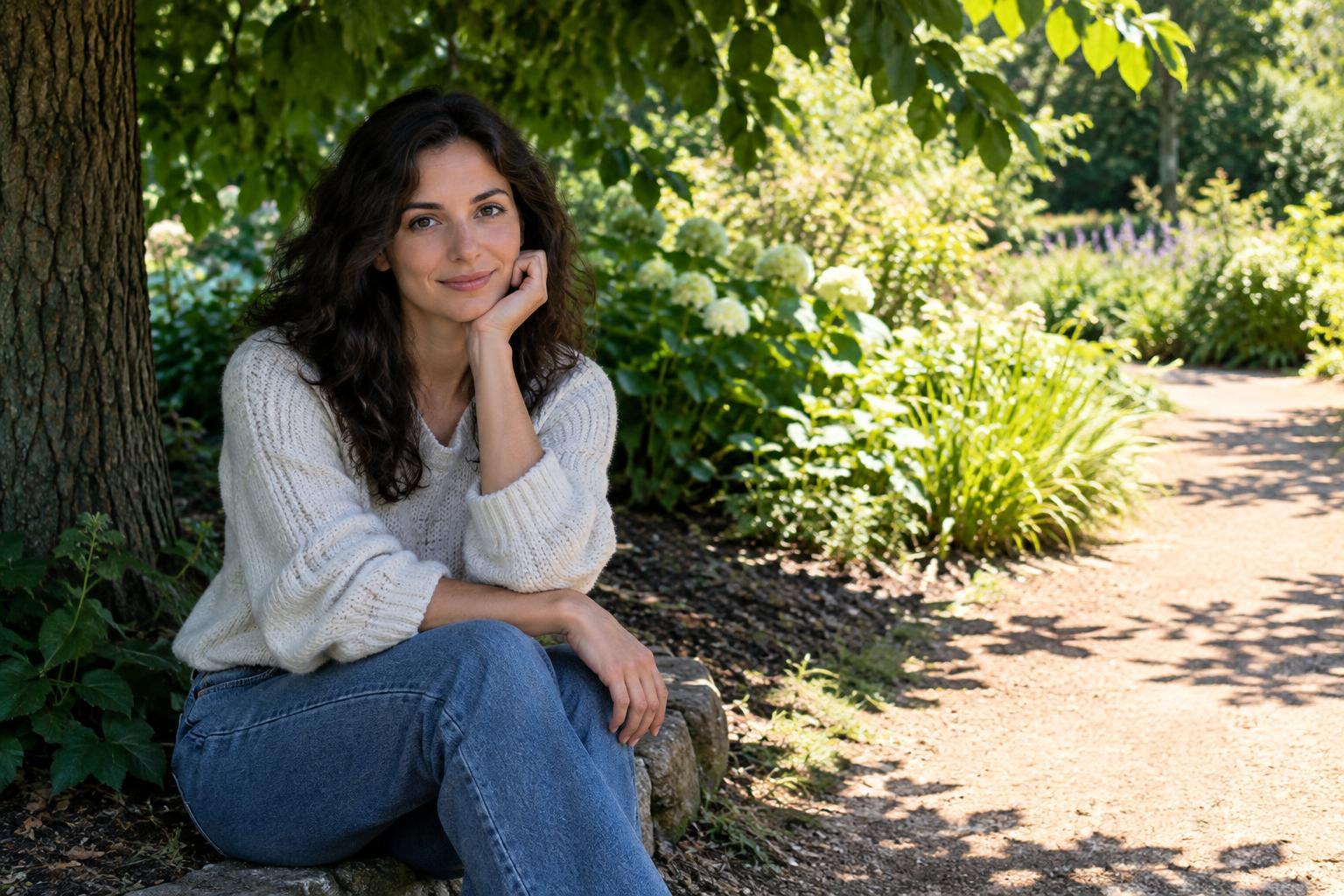
Open shade often gives people more even illumination than strong direct sun. It can reduce harsh shadows under brows and noses, and it may make it easier to retain detail in both light and dark parts of a face. For portraits, place the subject near the outer edge of the shade and ask them to turn toward the open sky. That bright area becomes a large light source, helping to give the face shape without the intensity of direct sunlight.
Shade has its own complications. A subject deep beneath a dense canopy may look dim or take on a green cast from surrounding leaves. Brightly colored walls can also reflect their color onto skin or clothing. Look for a clear view of the sky, check the colors in the image and move a few steps if the light feels flat or tinted. If the camera brightens a shaded subject automatically, watch that a sunlit background does not become distractingly bright.
Choose direct sun when its contrast helps the story
Direct sun produces more defined shadows and can emphasize form, pattern and texture. Side light can reveal the contours of a building or the texture of a surface. Backlight can outline hair or separate a subject from a darker background. Even hard light across a face may suit an image intended to feel stark or energetic. The important question is whether the shadows contribute something, rather than simply hiding details you need.
Under strong overhead sun, shadows beneath a person’s eyes and nose can be prominent. If that works against your purpose, change the angle before changing equipment: rotate the subject, move to a nearby patch of shade or shoot from another side. When the sun is behind a person, expose for the face if facial detail matters, while accepting that the bright background may lose some detail. If the silhouette is the point, expose for the brighter surroundings instead. Review the result and adjust according to what must remain visible.
Match the background to the light
A well-lit subject can still be difficult to read against a busy or much brighter background. In open shade, look for a background that is also shaded, or position the subject so the bright area behind them does not dominate the frame. In direct sun, notice where shadows fall in the background. A dark doorway behind a sunlit subject can provide separation, while scattered bright patches may pull attention away from them.
You can often improve an outdoor image without changing the location. Take a step left or right, lower the camera, or move the subject a short distance. Watch how those small changes affect both the light on the subject and the shapes behind them. If you are photographing a scene you should not rearrange, move yourself instead. The same habit applies: examine the whole frame, not just the brightest face or object.
Make a deliberate choice, then check it
A quick comparison can clarify what the scene needs. Make one frame in open shade and another in direct sun when the situation allows it. Compare shadow detail, color, background brightness and the direction of the viewer’s attention. On a camera with exposure compensation, you can make a subject brighter or darker without relying entirely on the camera’s first reading. Check the image rather than assuming that a brighter exposure is always better.
Open shade is a practical choice when you want gentle transitions and readable detail. Direct sun is useful when clear shadows, strong shapes or a particular sense of brightness support the picture. Neither light guarantees a good photograph. Choosing well means deciding what viewers should notice, placing the subject accordingly and checking whether the resulting image communicates that intention.