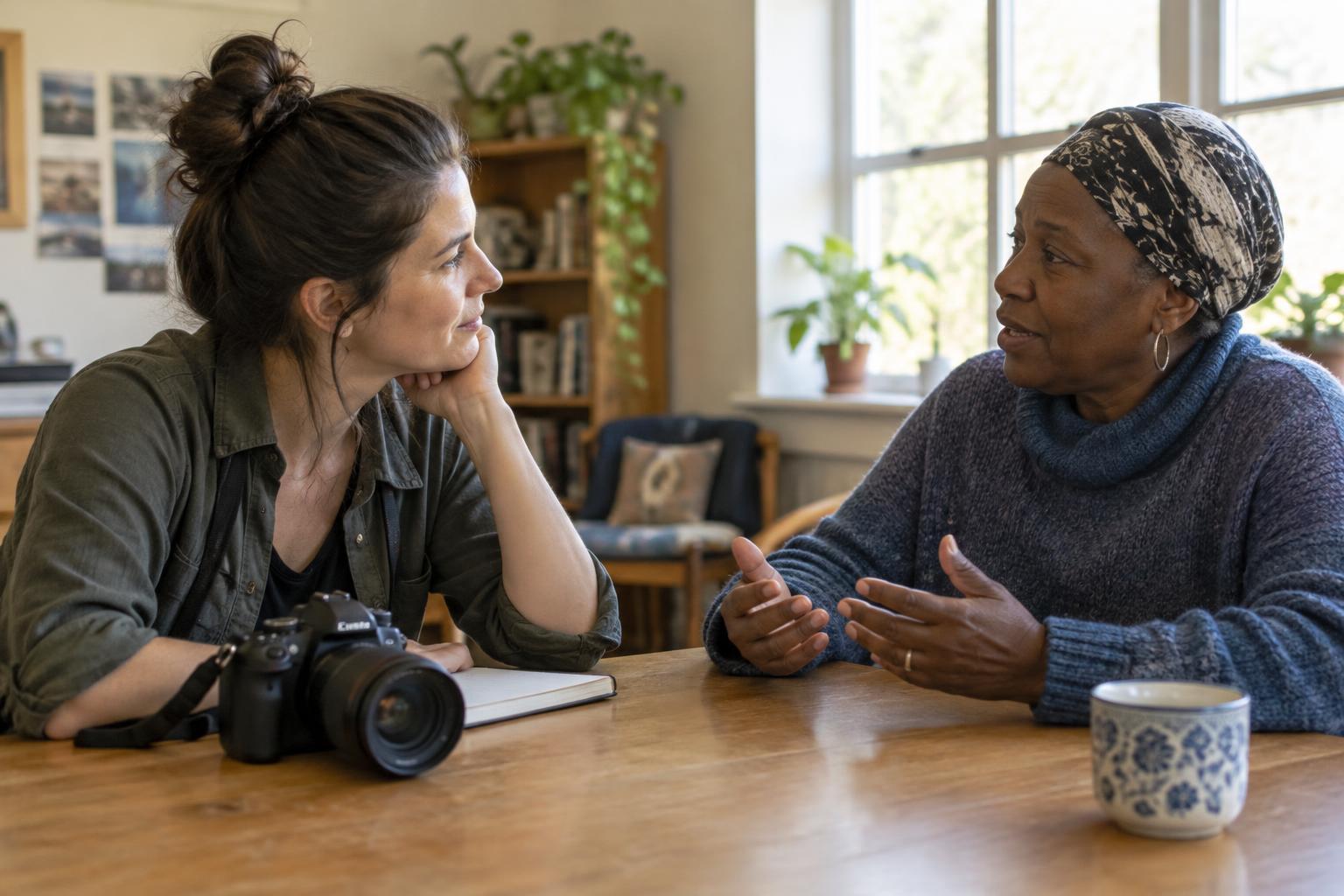
Start with the person, not the picture
A compelling photograph can draw attention to hardship. It can also flatten a person into a symbol of it. Before raising a camera, ask what the story is meant to help viewers understand and whether the person being photographed has a meaningful place in that story beyond their distress. If the image would work only because someone looks frightened, injured or exposed, consider what it leaves out.
Vulnerability is often situational. Someone may be able to make choices in ordinary circumstances but have little room to do so during a crisis, while receiving care or when a photographer controls access to an audience. A respectful approach begins by recognizing that imbalance. Introduce yourself, explain the purpose of the work in plain language and make space for a refusal. Being allowed into a place does not, by itself, make every person there a willing subject.
Treat consent as an ongoing conversation
A quick yes is not always enough to establish that someone understands what participation involves. Where circumstances allow, explain what you plan to photograph, where the images might appear and what you cannot promise about who may see or share them afterward. Avoid suggesting that a photograph will bring help or change if you cannot make that happen. A person should be able to decline a particular frame or pause a conversation without having to justify the choice.
Conditions can change during an encounter. Someone who welcomed a portrait may not want a private conversation, a medical procedure or an emotional moment photographed. Pay attention to hesitation, fatigue and attempts to turn away. With children and people whose ability to decide is limited in the moment, take extra care; permission from a guardian or institution may not settle every ethical question. When meaningful consent is doubtful, a less identifying image—or no image—may be the better choice.
Make room for a fuller life
Hardship may be central to a documentary story, but it is rarely the whole story of a person. Look for ordinary actions, relationships, decisions and surroundings that help a viewer understand how someone lives, not just what has happened to them. Ask what the subject considers important about their experience. Listening can change the story you thought you were making and reveal details that a dramatic frame alone would miss.
This does not mean making difficult conditions look comfortable or asking people to perform resilience for the camera. It means resisting a narrow visual formula in which visible suffering becomes the only evidence that a story matters. A photograph of someone working through a routine problem, speaking with a neighbor or making a choice may carry more information than a close-up of tears. Leave scenes undirected unless the work is clearly presented as staged, and do not invite someone to repeat a painful action to improve the frame.
Edit for accuracy as well as impact
Ethical decisions continue after the camera is put away. In a sequence, notice whether the most dramatic images dominate while quieter pictures that explain the setting disappear. Choose frames for what they communicate accurately, not only for their emotional force. Cropping, tonal adjustments and image order can all change how a viewer reads an event. Avoid edits that make a scene appear more threatening, isolated or chaotic than the photographs support.
Captions should give viewers enough context to avoid easy but mistaken assumptions. Distinguish what you observed from what someone told you, and avoid assigning feelings or motives based on an expression. Check names and identifying details where practical, then consider whether publishing them could expose a person to unwanted attention. Privacy is not limited to faces: clothing, locations, relationships and background details can identify someone. If a revealing detail is not necessary to the story, consider leaving it out.
Know when to put the camera down
Not every important moment needs to become an image. If photographing interferes with immediate safety, adds pressure to someone in distress or risks exposing a person for little public understanding, stop and reassess. You can step back, wait, photograph a broader scene or seek a different way to explain the issue. These choices are part of documentary practice, not a failure to get the shot.
Before publication, review the work as a stranger might encounter it: What would they learn about the person, and what might they assume without evidence? Ask whether the subject’s circumstances are clear without making humiliation the point of interest. No single test resolves every case, and subjects may disagree with a portrayal even when care was taken. The aim is to make defensible choices throughout the process—and to remain willing to revise them when you recognize a risk you missed.