What sensor size changes
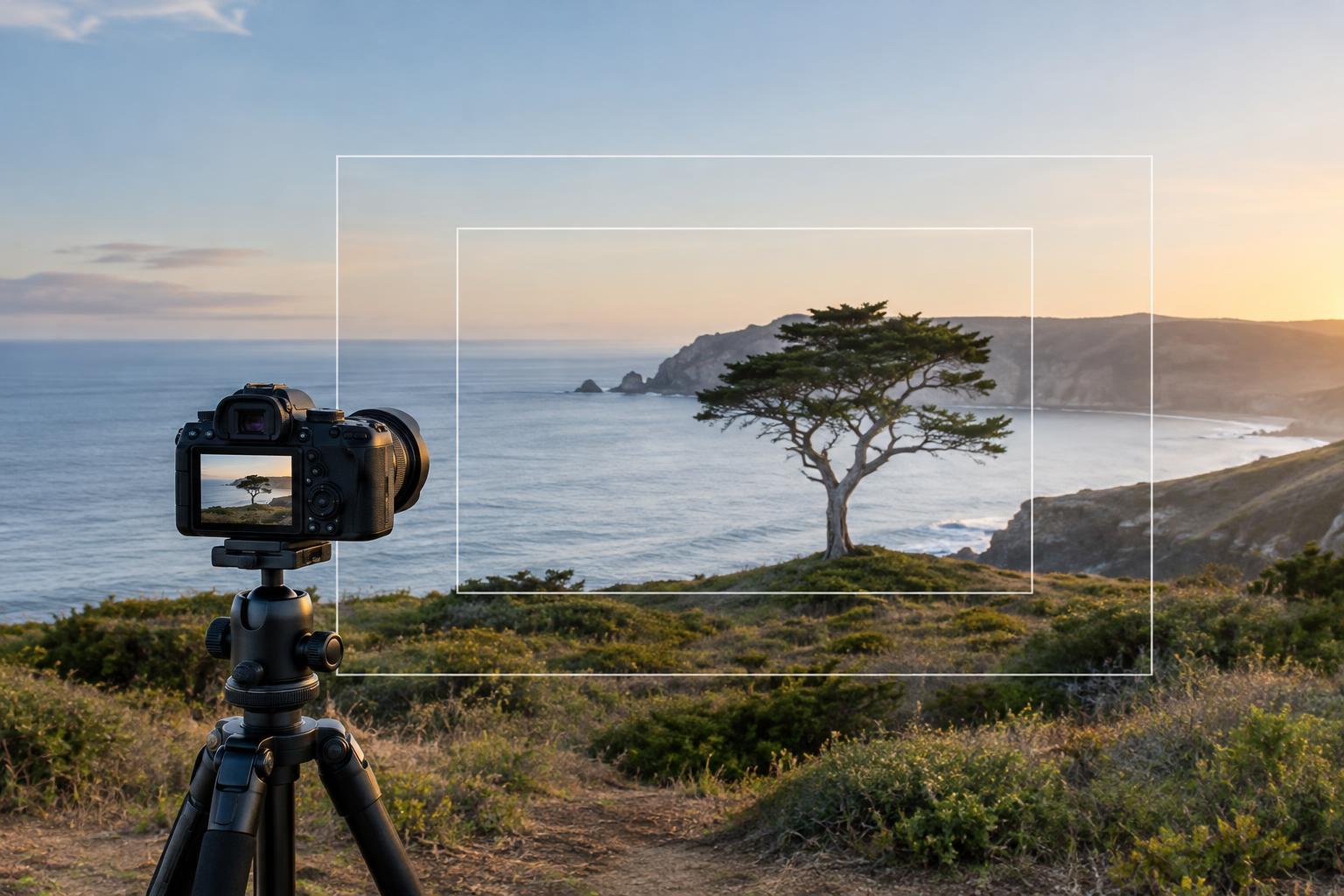
A lens projects an image of a scene toward the camera’s sensor. A larger sensor can record more of that projected image; a smaller sensor records a narrower portion, provided the lens and camera position stay the same. That difference in what fits inside the frame is a difference in field of view. The smaller sensor has not made the lens magnify the subject or changed the lens’s actual focal length.
Imagine taking a photograph and trimming away its edges. The remaining picture covers less of the scene, even though the relationships among objects in it have not changed. This is a useful way to picture sensor crop. It also explains why a lens that feels comfortably wide on one camera might feel tighter on another. The exact comparison depends on both sensors’ dimensions and, when framing a photograph, their aspect ratios.
Using crop factor to compare lenses
Crop factor is a shorthand for comparing a sensor’s size with a reference format, usually 36 × 24 mm full frame. It is typically based on the diagonal of the sensor. For example, a camera with a crop factor of 1.5 records a narrower field of view than a full-frame camera using the same lens from the same position. A 50 mm lens on that smaller sensor gives approximately the field of view of a 75 mm lens on full frame: 50 multiplied by 1.5 equals 75.
This result is called a full-frame-equivalent focal length. It describes framing, not a physical change to the lens. Going the other direction, if you want roughly the field of view of a 50 mm lens on full frame, divide 50 by 1.5. A lens near 33 mm would be a starting point on that crop-sensor camera; a commonly available 35 mm lens would be close.
Crop factors are not identical across all cameras labeled with the same broad sensor format. Some APS-C cameras are around 1.5, others around 1.6, while Micro Four Thirds cameras are commonly described as having a factor of about 2. Treat these numbers as planning aids rather than guarantees of identical framing, especially when comparing images with different aspect ratios.
Field of view is not perspective
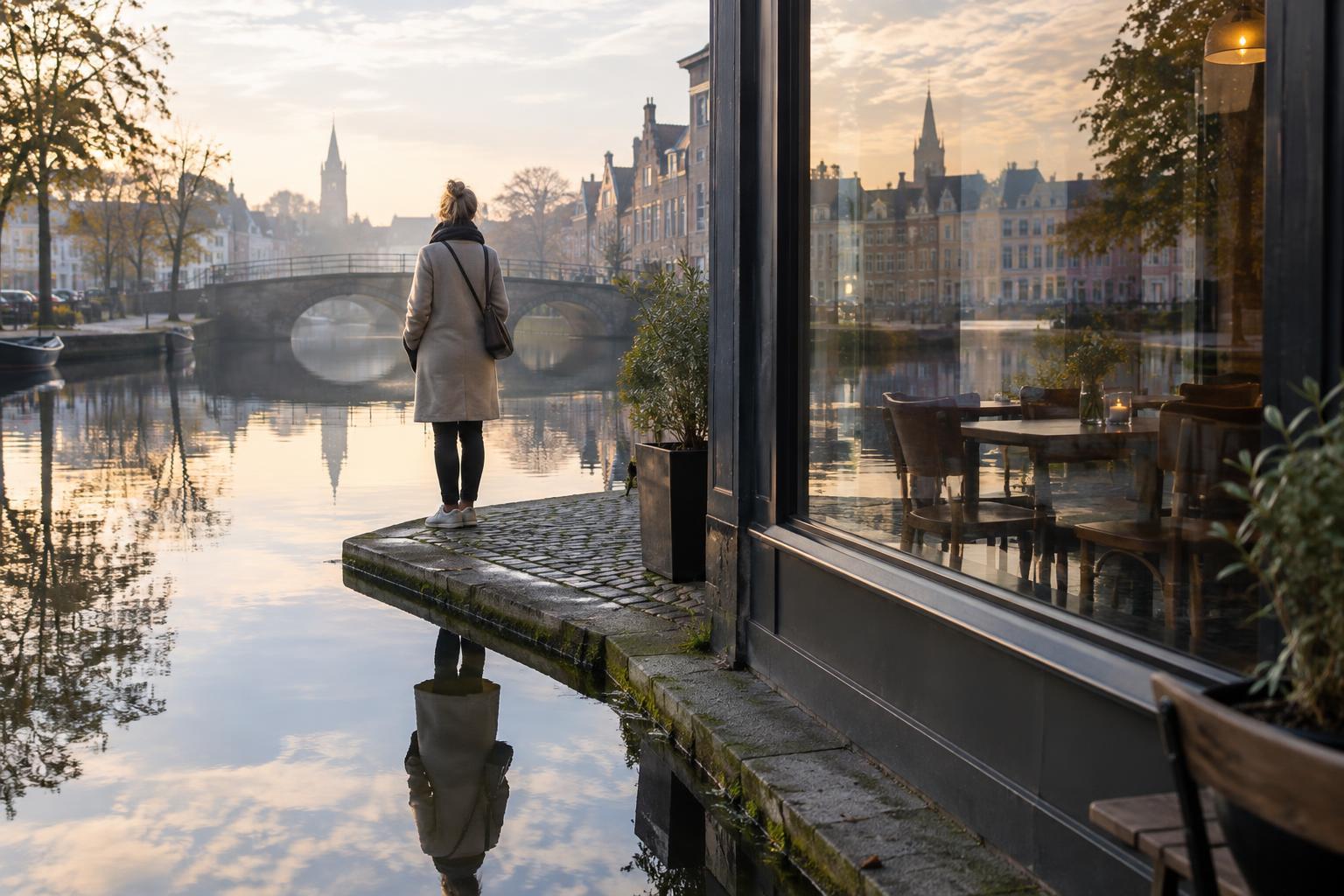
Perspective describes how near and far objects appear in relation to one another. It depends on where you place the camera. If you photograph a person against a building without moving, then switch to a smaller sensor and use a shorter lens to restore similar framing, the person-to-building relationship stays essentially the same. The field of view can be matched without changing the viewpoint.
If instead you keep the same lens and step backward to fit the person into the smaller sensor’s frame, you change the camera position. The building may then appear larger relative to the person. That change is due to moving, not to the sensor itself. When choosing where to stand, consider how you want the subject and background to relate; then choose a focal length that includes the desired amount of the scene.
What crop factor does not tell you
Matching field of view does not automatically make two photographs look identical. Depth of field—the range that appears acceptably sharp—can differ when you change focal length, aperture or camera position to create the match. For a useful comparison, decide what stays fixed: camera position, framing, aperture setting and final display size all matter. Crop factor alone cannot predict the background blur in a finished image.
Nor is a smaller sensor automatically better for distant subjects. Its narrower field of view can help fill the frame when you cannot move closer, but detail also depends on the lens, focus, exposure, sensor resolution and how much the final image is enlarged. Likewise, cropping a photograph from a larger sensor may produce similar framing while leaving fewer pixels for the final image. These are practical trade-offs, not rules that make one sensor size right for every photograph.
A simple way to plan a shot
Start with the viewpoint. Move until the spacing between your subject and background looks right. Next, choose the field of view: use a wider lens to include more surroundings or a longer lens to exclude them. If you are translating a lens choice between camera systems, multiply its focal length by the crop factor to compare it with full frame, or divide a desired full-frame-equivalent focal length by the crop factor to find a starting point for your camera.
Finally, check the actual frame through the viewfinder or on the screen. Equivalence calculations help you pack a lens or anticipate a composition, but the edges of the image tell you what you will record. Thinking separately about viewpoint and framing makes crop factor a helpful tool rather than a confusing label.