Start with the story the photographs can support
Before arranging images, write one sentence describing what the essay is about. Make it specific enough to guide selection: a shared space being used throughout a day, for example, is a different story from a portrait of one person who uses it. Then list what a viewer would need to see to understand that subject. This gives you a working structure without forcing every image into a predetermined plot.
Review the full set before choosing favorites. Mark photographs that establish place, show people or actions, reveal details, and add a different perspective. Also note what is missing. An attractive image cannot establish a fact it does not show, and a sequence should not imply that events happened in a particular order unless that order is known. If you have gaps, narrow the story’s scope rather than asking the viewer to fill them with guesses.
Give viewers a way in
An opening image should invite attention while giving viewers a foothold. A wide view might show where the story takes place; a moment of action might introduce its central activity. Neither has to explain everything. The next few images can supply what the opener leaves open: who is involved, what they are doing, and which surroundings matter. This is context, not merely background decoration.
Think about what an unfamiliar viewer can reasonably infer from each frame. A close-up may be compelling but ambiguous until a wider image identifies the object or setting. Conversely, a wide view may orient the viewer but offer little reason to keep looking. Pairing the two can provide both clarity and curiosity. Captions can supply necessary names, locations or circumstances when those details are verified, but they should not be used to make an unclear photograph seem more conclusive than it is.
Build development through change and contrast
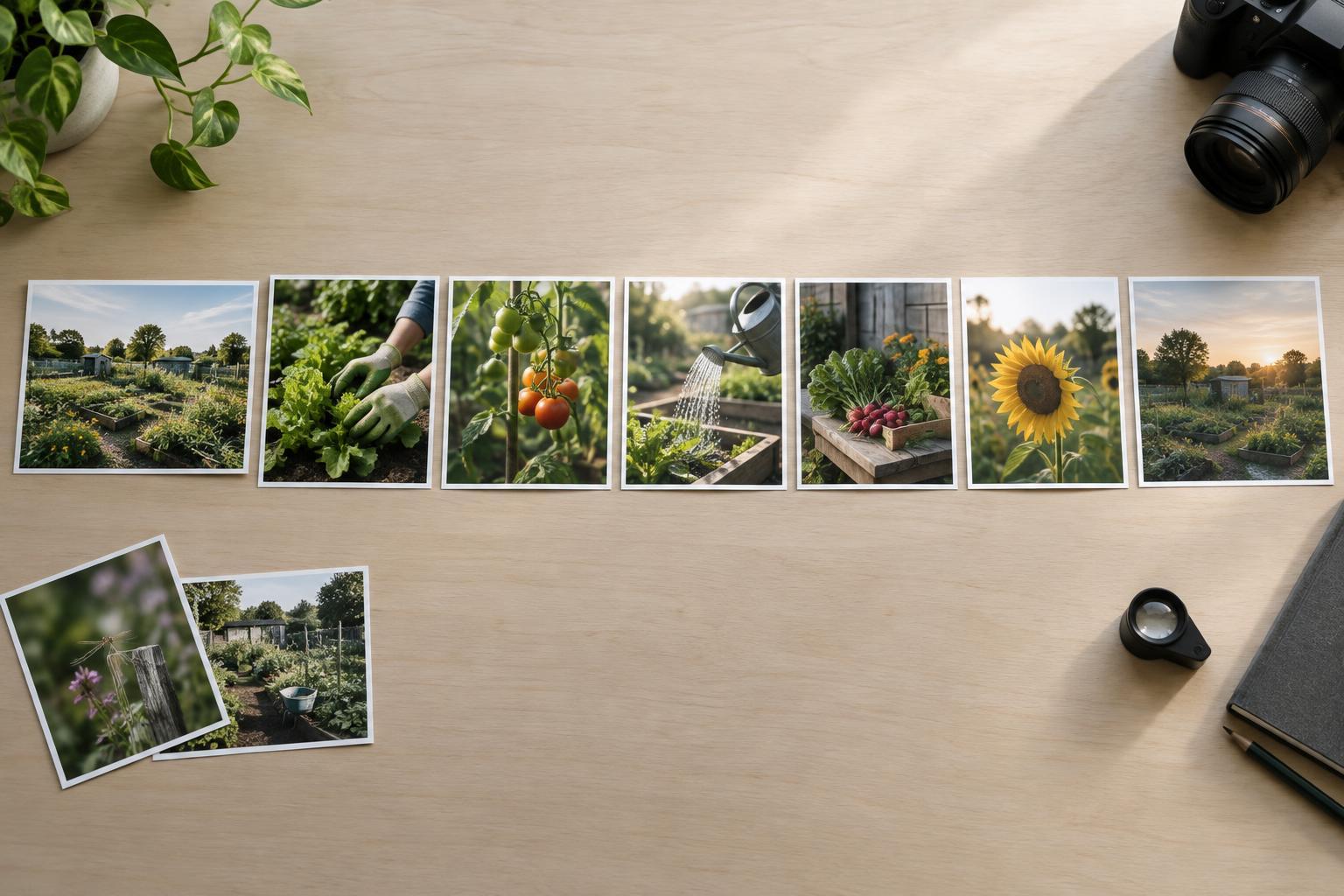
The middle of an essay should do more than repeat its opening. Look for images that show a process advancing, a relationship becoming clearer, or a new aspect of the subject emerging. Development does not require drama. A sequence about a routine can move from preparation to work to its visible result, while a story about a place can shift from an overview to the different ways people use it.
Vary image distance and visual rhythm in service of understanding. A wide frame can establish relationships among people and surroundings; a medium view can clarify an action; a detail can direct attention to something easily overlooked. Avoid placing several near-identical images together unless their differences are the point. Transitions should give the viewer a reason to move forward, whether through a continuing action, a shared visual element or a meaningful contrast.
Be careful with visual cause and effect. Two adjacent photographs can suggest that one event led to another, even when the images were made at different times or depict unrelated moments. If that connection is uncertain, change the order, add accurate context or leave one image out. A compelling sequence is not worth a misleading implication.
End with resolution, not forced closure
A final image can show an outcome, return to an earlier setting with new meaning, or leave viewers with a question grounded in what they have seen. Resolution means the essay has reached a considered stopping point; it does not mean the subject’s circumstances have been settled. In documentary work, an ending that suggests certainty where none exists can distort the story.
Test the last few images together. Does the ending grow from the sequence, or does it rely only on a striking picture? A quiet image may work well after a busy passage if it gives viewers space to consider the subject. If the strongest candidate introduces an entirely new idea, it may belong earlier—or signal that the essay needs a different focus.
Edit for clarity and responsibility
Lay out a small first edit, then move images around without treating the initial order as fixed. Read the sequence once without captions and note where you lose track of place, time or action. Read it again with captions and ask whether they clarify essential facts without claiming access to anyone’s private thoughts or motives. Removing a beautiful but redundant frame often makes the remaining images easier to understand.
Before publishing, consider whose perspective the edit emphasizes and what it leaves out. Check whether crops, captions or juxtapositions change the apparent meaning of a scene. When a timeline matters, make it clear rather than relying on sequence alone to communicate it. The goal is not to answer every possible question, but to give viewers enough context to follow the essay and enough honesty to recognize its limits.