What changes when you take more frames?
In single-shot shooting, one press of the shutter records one photograph. Burst mode, also called continuous shooting, records a sequence while you hold the shutter button down. The available speed and the length of a burst vary by camera and settings, but the underlying choice is simple: do you want to decide on one moment, or give yourself several closely spaced moments to choose from?
Neither method is automatically more skilled or more reliable. A single frame encourages you to watch, compose and press the shutter deliberately. A burst can help when a subject’s position or expression changes faster than you can confidently time one press. More frames increase your chances of recording a useful instant, but they also create more images to review. The best choice depends on what might change during the next few seconds.
Choose a single shot when you can anticipate the moment
A still subject, a carefully arranged portrait or a landscape usually gives you time to check the edges of the frame and make one considered exposure. Single-shot shooting is also useful when you want to pause between photographs and reassess the scene. You might notice a distracting object in the background, a tilted horizon or a change in light that rapid shooting would not solve.
One frame can also be the practical choice in a quiet setting where repeated shutter sounds might be distracting, or when a flash needs time to recharge between exposures. If you know an action is coming, try following it through the viewfinder and pressing the shutter at the moment you want to show. Missing occasionally is part of learning its rhythm; reviewing those attempts can improve your timing.
Use a short burst for brief, unpredictable changes
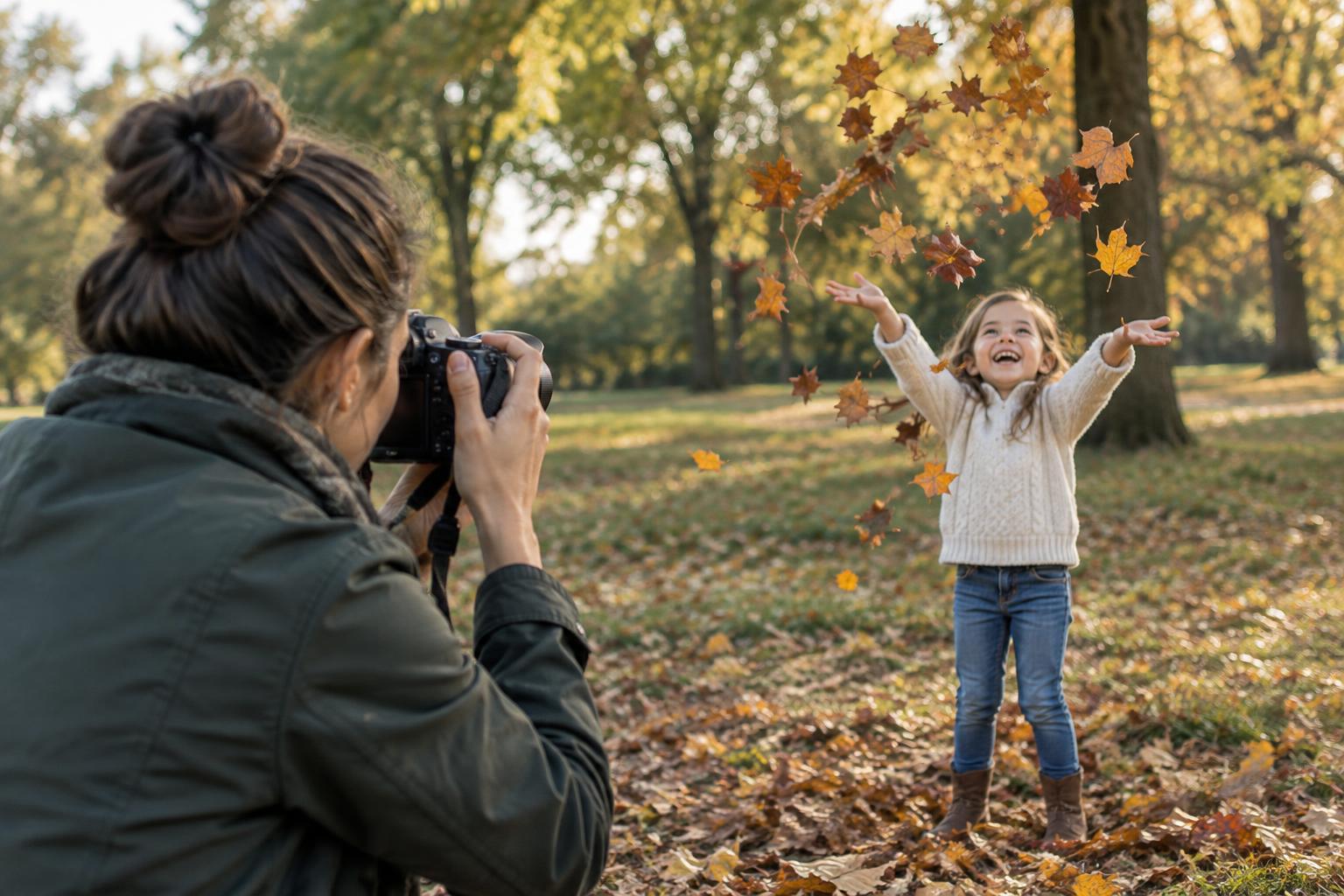
Burst mode is most helpful when small differences between frames matter. A person may blink during a group photograph, a bird may shift its wings, or a child may move from an awkward step into a balanced stride. Starting a brief burst just before the expected peak of an action and stopping just after it can give you useful choices without filling the card with nearly identical images.
Burst mode does not freeze motion by itself. Each frame still depends on the shutter speed, available light and other exposure settings. It also cannot guarantee accurate focus or a clear view of a subject. Before the action begins, frame with enough room for movement and check how your camera handles focus during continuous shooting. Some focus settings keep adjusting between frames; others may not. A quick practice sequence is more useful than assuming every frame in a burst will be sharp.
Think about the cost of extra frames
Long bursts can make it harder to spot the photograph that best communicates what happened. They use storage space, take time to import and may slow a camera once its temporary memory fills. If you are using flash, rapid frames may also have inconsistent lighting when the flash cannot recharge quickly enough. A short, purposeful sequence is often easier to manage than holding the shutter down throughout an entire event.
For documentary work, the choice affects more than convenience. A frame taken a fraction of a second earlier or later can make an expression or gesture look very different. When selecting from a burst, consider whether the chosen instant fairly represents the situation rather than merely creating the strongest-looking image. Keep enough context in the frame, or in the surrounding sequence, to help you interpret what you recorded.
Build a simple shooting and selection habit
Before pressing the shutter, ask two questions: Can I predict the important moment, and will several nearby frames give me meaningfully different options? If the scene is steady, start with one frame and inspect it. If the action is brief or expressions are changing quickly, try a short burst. You can switch approaches as the situation changes; the mode is a tool, not a rule for the whole session.
Afterward, review sequences as groups. First remove frames with clear technical problems, such as missed focus or an obstructed subject. Then compare the remaining images for gesture, expression, composition and context. Keep the strongest frame when the others add nothing, but retain additional frames if they help explain a progression. Practicing with a simple action, such as someone tossing a ball, will show you when your timing is sufficient and when a burst genuinely helps.