What negative space does
Negative space is the area around a photograph’s main subject. It might be a plain wall, an open sky, a dark doorway, or a stretch of pavement. It does not have to be blank. Its defining feature is that it asks for less attention than the subject, giving the viewer a clearer place to look first.
Consider a person standing beside a busy noticeboard. Signs, colors, and other faces may compete with that person. Moving a few steps so the person appears against an unmarked wall can make the subject easier to recognize without changing the person’s pose. The space works because it reduces competing detail. But separation is not always the goal: if the notices explain why the person is there, removing them may weaken the story. Before simplifying the frame, decide what the viewer needs to see and understand.
Choose space that supports the subject
Start by identifying the subject and the detail you want a viewer to notice: a gesture, an expression, a shape, or a relationship between people. Then look at the edges of the frame. Are bright objects, sharp lines, or partial figures pulling attention away? A small change in camera position often helps more than a wider aperture. You can step to one side, lower the camera, or wait for a distracting passerby to leave the background.
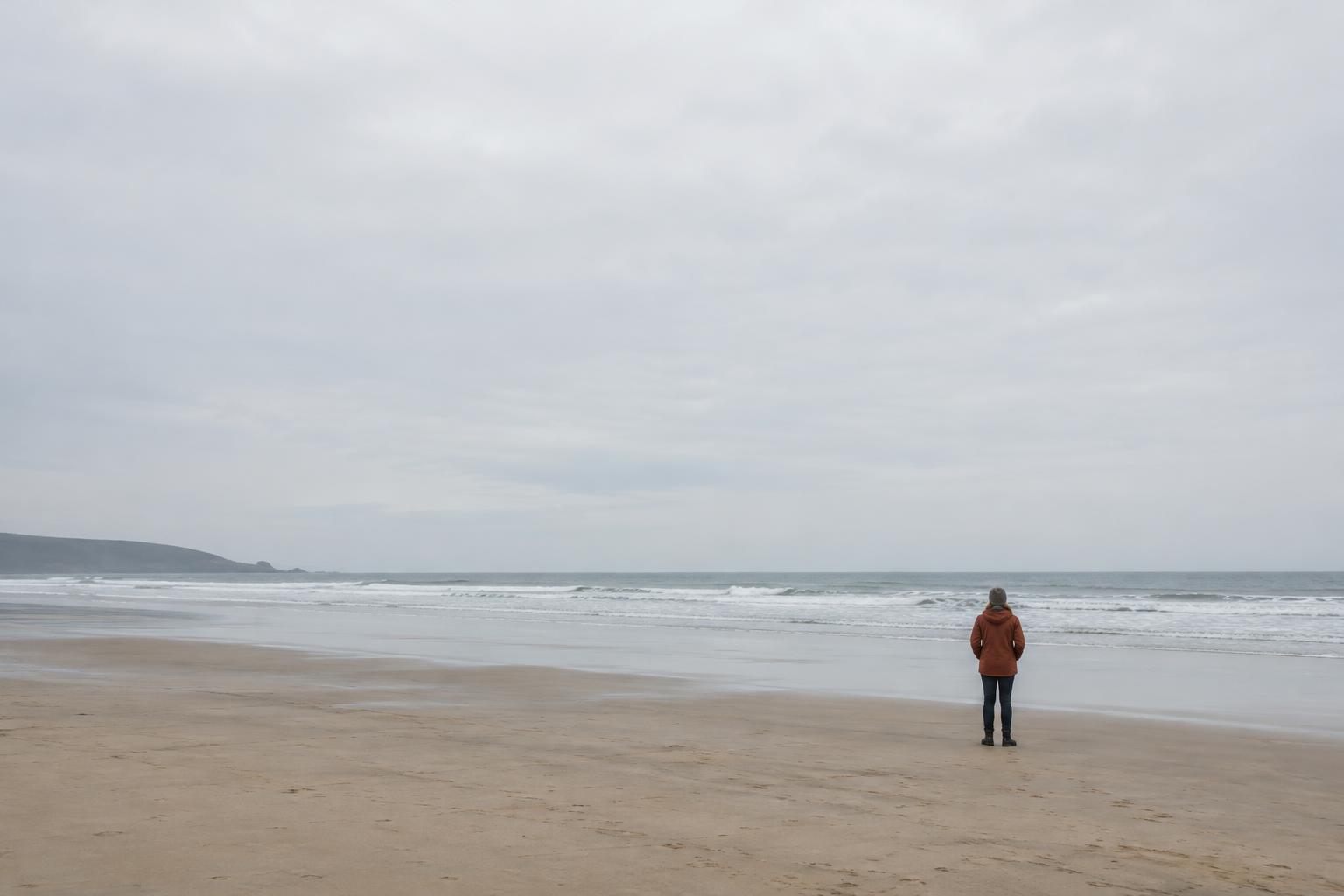
The amount and placement of space also affect how a picture feels. A small subject surrounded by a large, quiet area may seem isolated or vulnerable; a subject with a modest margin of space may feel more immediate. These are possibilities, not fixed rules. An empty area can simply show the scale of a place. Check whether the space adds a useful sense of setting or merely makes the subject hard to find.
If the subject is moving, leave room in the direction of travel or gaze and compare the result with a frame that places the space behind them. Neither arrangement is automatically better. Space ahead can suggest a destination; space behind can emphasize where someone has come from or create tension near the frame’s edge. Make both frames when possible, then judge which one communicates your intention more clearly.
Use light and tone to keep the space quiet
Negative space depends on visual attention, not just physical emptiness. A smooth background can still dominate if it is much brighter or more colorful than the subject. Watch for a patch of sky that draws the eye away from a shaded face, or a vivid wall that overwhelms a small figure. Changing your angle may replace that patch with a calmer tone while preserving the scene.
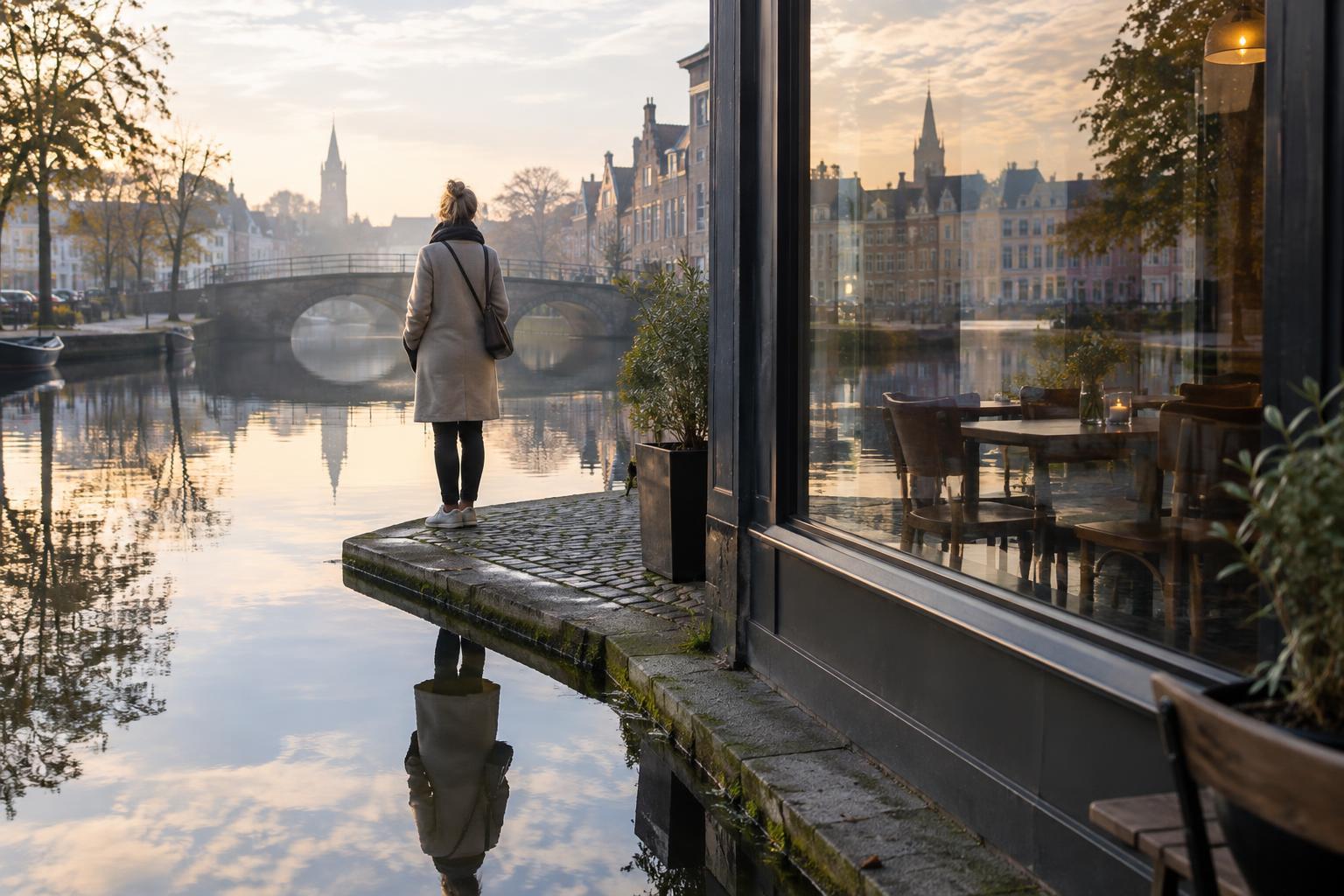
Light can also create useful space where the setting is cluttered. A subject near a window may stand out against a darker room, while a silhouette can become legible against a bright, simple background. In either case, check the outline of the subject: a lamp, tree branch, or strong line crossing a face or body can make the shape harder to read. The goal is not necessarily perfect separation, but a frame whose important parts remain distinguishable at a glance.
Frame deliberately without stripping away context
Try making three versions of the same scene: one with ample space, one with a closer frame, and one that includes more surroundings. Looking at them together reveals what each choice gains and loses. The spacious version may highlight a gesture; the wider version may explain the location or the relationship between subjects. This comparison is especially useful when a photograph is meant to inform, not just attract attention.
Cropping during editing can refine a frame, but it cannot restore context you did not capture. It can also change the apparent significance of a person or event by excluding nearby details. For documentary work, keep an uncropped original and consider whether the tighter version remains a fair representation of the scene. A visually clean photograph is not necessarily a more truthful or useful one.
Practice seeing the whole frame
For a simple exercise, photograph one stationary subject from several positions without directing or moving it. Make one image with the subject centered and little surrounding space, one with space to a side, and one with space above or below. Keep the subject recognizable in every version. Then view the images at a small size and note where your eye goes first, what you notice second, and which details seem important.
Use those observations on your next shoot. Before pressing the shutter, scan both the subject and the areas around it. Ask whether the quieter parts of the frame help the viewer understand what matters. When they do, negative space becomes an active part of the photograph: it gives the subject room to register while leaving the necessary story intact.