A subject is not yet a story
A collection of photographs can show the same person, place, or activity and still leave viewers unsure what to take away. Shared subject matter creates a category; a story creates a path through it. A photo essay needs a focused idea or question that helps determine which images belong, how they relate, and why someone should keep looking.
That focus does not have to be a dramatic event. An essay about a community garden might explore how people share space, how work changes across a day, or how tools and routines reveal cooperation. Each version would call for a different set of photographs. Before selecting images, try completing this sentence: “This essay helps viewers understand…” If the answer is only a broad topic, narrow it until it can guide choices.
Images need to do different jobs
A useful sequence offers more than repeated proof that something happened. A wide view can establish where an activity takes place. A closer scene can show people interacting. A detail can draw attention to an object or gesture that matters. A quieter image may give viewers room to notice a consequence, a pause, or a contrast. These are possibilities, not a required shot list; the point is that each photograph should add information or change the viewer’s understanding.
Two striking pictures may compete for the same role. If both make an identical point, keeping only one may strengthen the essay. Conversely, an image that seems modest on its own may be essential because it connects two scenes or makes a transition understandable. Edit for what a photograph contributes to the whole, not just for its individual beauty. Ask what viewers would lose if you removed it.
Sequence creates movement and meaning
Order affects interpretation. The same images can suggest different relationships depending on what comes before and after them. An opening photograph can orient viewers or raise a question; later images can develop that question through action, contrast, or closer observation. An ending can leave viewers with a useful insight or an honest sense of what remains unresolved. It need not deliver a neat conclusion.
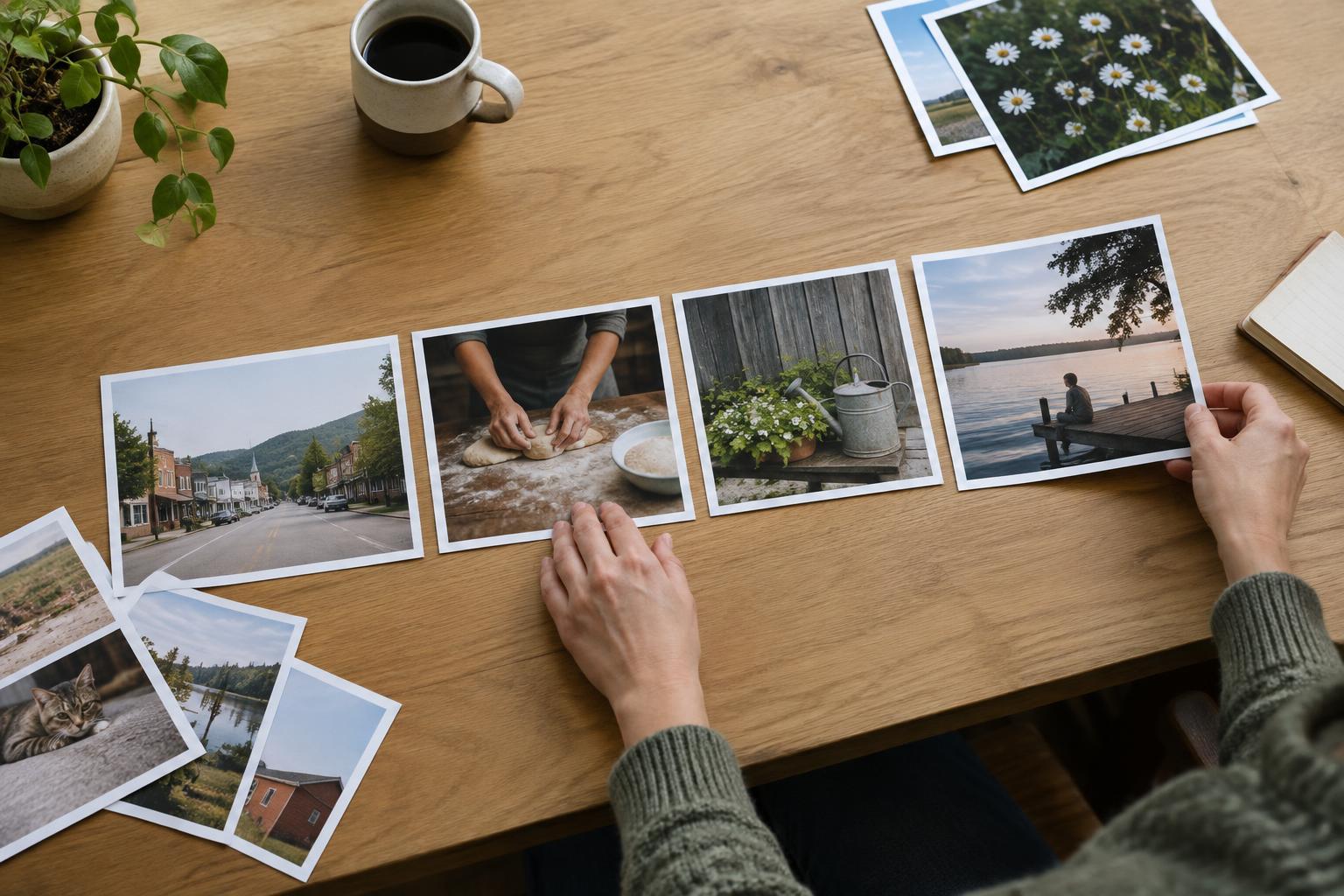
Lay out a draft sequence and read it without captions. Where do you hesitate? Where does one image merely repeat the last? Then read it with captions and check whether the intended connections are supported. A photo essay may follow time, move through a place, compare perspectives, or build around a recurring detail. Choose the structure that fits what you actually photographed, rather than arranging images to imply a progression that did not occur.
Context keeps the story grounded
Photographs show selected moments within a frame. They rarely explain, on their own, who is pictured, what happened just outside the frame, or whether a moment is typical. A short introduction and clear captions can supply information viewers need without telling them exactly what to feel. Distinguish what the image visibly shows from what you know through direct observation, and avoid presenting guesses about a person’s thoughts or circumstances as facts.
Context also helps prevent accidental exaggeration. A tense expression does not establish conflict; an empty room does not necessarily signify abandonment. If the essay depends on an interpretation that the images and reliable contextual information cannot support, reconsider the claim. When photographing people, especially in private or vulnerable situations, think about consent, dignity, and the possible effects of publication. Responsible storytelling includes decisions about what not to show.
Edit toward clarity, not a predetermined message
Start with a broad selection, then group images by the work they do: setting, action, relationships, detail, change, or reflection. Notice gaps. You may need a clearer view of the setting, or you may discover that your strongest material supports a different focus than the one you planned. If more photographing is possible, let those gaps guide what you look for. If it is not, shape a narrower essay rather than implying you documented what you missed.
Finally, test the sequence with someone who has not seen the full set. Ask what they think the essay shows and where they need more context. Their reading may reveal an unclear transition or an unsupported implication, even if you choose a different interpretation. A photo essay becomes a story when its selection, order, and words work together to offer a meaningful account while remaining faithful to the limits of the images.