Start with what the image is asking you to believe
A photograph usually suggests that something appeared before a camera. An edited image may borrow that expectation while changing the scene, adding text or combining elements from different pictures. In a meme, those changes can be the point: the image might express frustration, mock an argument or make an absurd comparison. Its purpose is not necessarily to document the scene it depicts.
The useful question is not simply, “Is this fake?” Ask instead, “What claim would I be making if I shared this as true?” A picture of a public figure in an impossible situation may plainly be a joke. But a similar image, cropped to remove its caption or posted with a factual-sounding description, can appear to show an actual event. The pixels have not changed; the claim around them has.
Read the visual cues, but do not rely on them alone
Satire often signals itself through exaggeration, unlikely combinations, familiar meme layouts or text that delivers a punchline. Editing may also be visible in mismatched lighting, awkward edges or inconsistent scale. These clues are worth noticing, but none provides a dependable test. A carefully made joke can look convincing, and a genuine photograph can look strange because of perspective, timing or ordinary image processing.
Pay attention to what is attached to the image. A headline, caption, account name or comment can frame the same picture as humor, criticism or evidence. Check whether the words describe something that supposedly happened or use the scene to make a broader point. If you encounter a screenshot, remember that it may omit the original post’s caption, replies or clear satire label. Treat missing context as a reason to pause, not as permission to guess.
Trace the image before treating it as a record
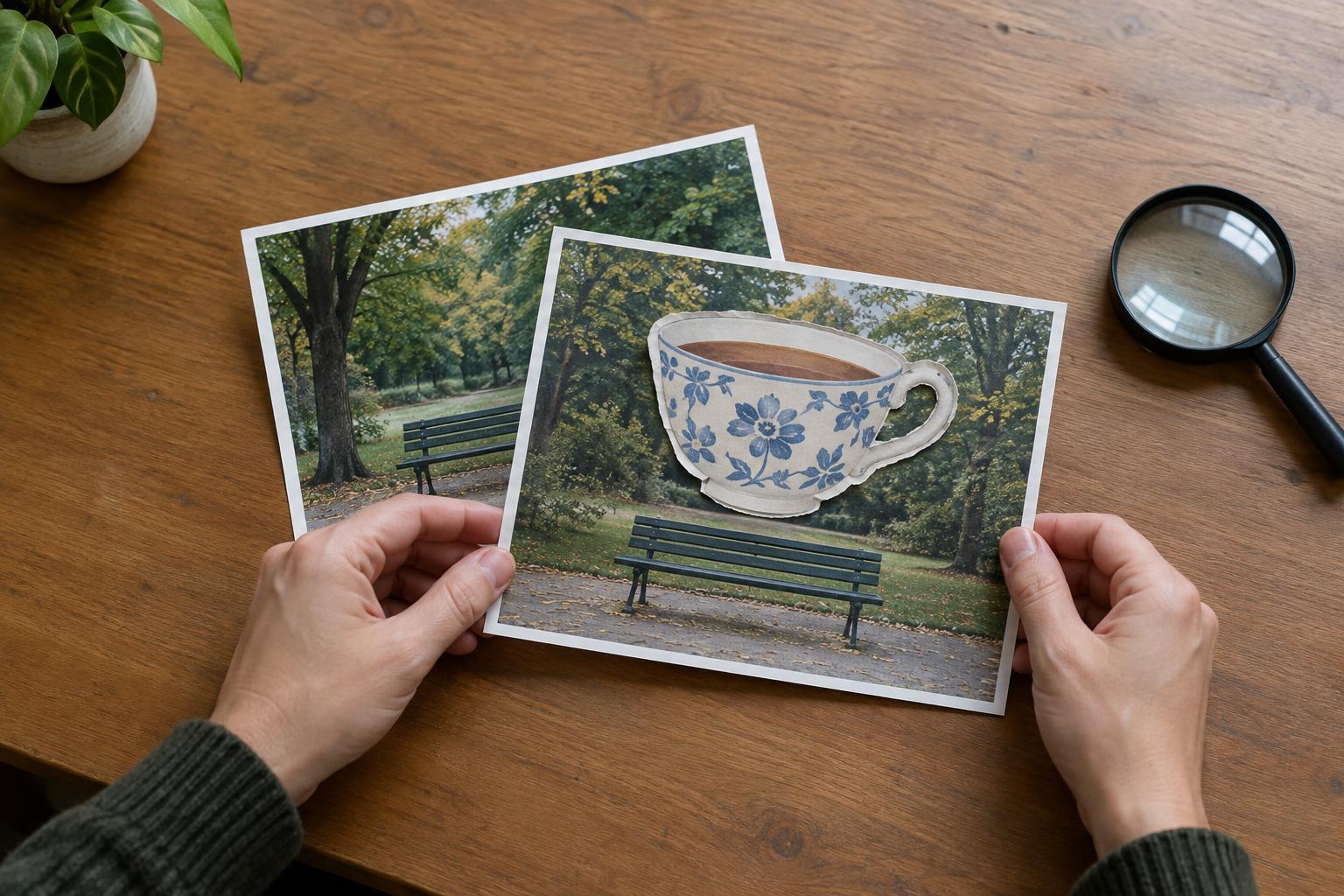
When the distinction matters, look for an earlier or fuller version of the image. Search for distinctive wording in its caption, inspect any visible credit and, where practical, use a reverse image search to find other appearances. A different crop may reveal a joke label; an earlier version may show that an object or person was added. These steps can help establish context, though they may not uncover a definitive original.
Separate the questions you are checking. Did the photographed background exist? Were the people pictured together? Was the text added later? Who posted this version, and how did they describe it? One answer does not settle the others. An edited image may use a real photograph as raw material without truthfully showing the event suggested by the finished composition. File information and platform labels can offer clues, but they may be absent, removed or incomplete.
Distinguish evidence of a scene from evidence of a message
An edited picture is generally poor evidence that its composite scene occurred. It can still be useful evidence of how someone chose to represent a person, issue or idea, provided you know enough about its origin and context. For example, a meme may demonstrate a style of criticism or a recurring visual metaphor. That is a different claim from saying the pictured action happened.
Intent also deserves care. A creator may mean a post as satire, while another account may circulate it as a factual claim. Conversely, calling an image “just a meme” does not erase the possibility that viewers will mistake it for a real photograph. Rather than trying to read a stranger’s mind, describe what you can observe: the visible edits, the accompanying words and the uncertainty about where the image first appeared.
Share the meaning without spreading the mistaken claim
Before reposting, consider how the image would read without your explanation. If someone could reasonably take it as documentation, add a direct label such as “edited image” or “satirical composite.” Say what the image comments on without repeating its invented scene as fact. When the creator is identifiable, retain the credit and the context that makes the joke understandable.
The same discipline helps when correcting someone else’s post. Explain the specific confusion—such as an added figure or a caption lost in a screenshot—rather than dismissing the entire audience as gullible. If you cannot establish the image’s origin, say so. Media literacy does not require treating every joke as a forensic case; it means recognizing when a visual argument is being mistaken for a visual record, and choosing words that keep the two apart.