What a detector can—and cannot—tell you
AI image detectors examine features of an image and estimate whether it may have been generated or altered using artificial intelligence. Their results may look definitive: a label, a percentage or a warning. But the output is an assessment by a particular tool, not a record of how the image was made. A high score is a reason to investigate, not proof that an image is synthetic. A low score does not establish that it is a trustworthy photograph.
The question itself is often more complicated than “real or AI.” A camera photograph might have an AI-generated background, a removed object or routine edits made with software that uses AI. An entirely synthetic image might be printed, photographed and shared as a new camera file. A detector asked to sort these into two categories may obscure the distinction that matters most: which parts of the image represent a documented scene?
Why confident-looking results can be wrong
Detectors look for patterns, and patterns can change. Cropping, resizing, screenshots, heavy compression and repeated uploads may remove or alter features a tool relies on. Different image-making systems and editing methods may also leave different traces. A detector that responds to one kind of image may perform differently on another. Without knowing how a tool was tested on images comparable to the one at hand, its score is hard to interpret.
Ordinary photographs can contain details that look strange to both people and software. Motion blur, unusual lighting, reflections, aggressive sharpening and low-quality compression may produce distorted textures or improbable-looking edges. Conversely, a convincing synthetic image may contain none of the obvious mistakes people expect. Visual oddities are useful prompts for closer examination, but they are not a dependable checklist for authenticity.
Two detectors agreeing does not automatically settle the matter. They may respond to similar features or make similar errors. Treat their outputs as separate clues only if you understand what each tool is designed to assess. Do not convert a collection of uncertain scores into a confident public accusation.
Start with the claim, not the pixels
Before testing an image, write down the claim attached to it. Is someone saying it shows a particular place, event, person or moment? Is it presented as a documentary photograph, an illustration or satire? An authentic photograph can be paired with a false caption, and a synthetic illustration can be clearly labeled and used responsibly. Detecting AI generation would not resolve every question about meaning or accuracy.
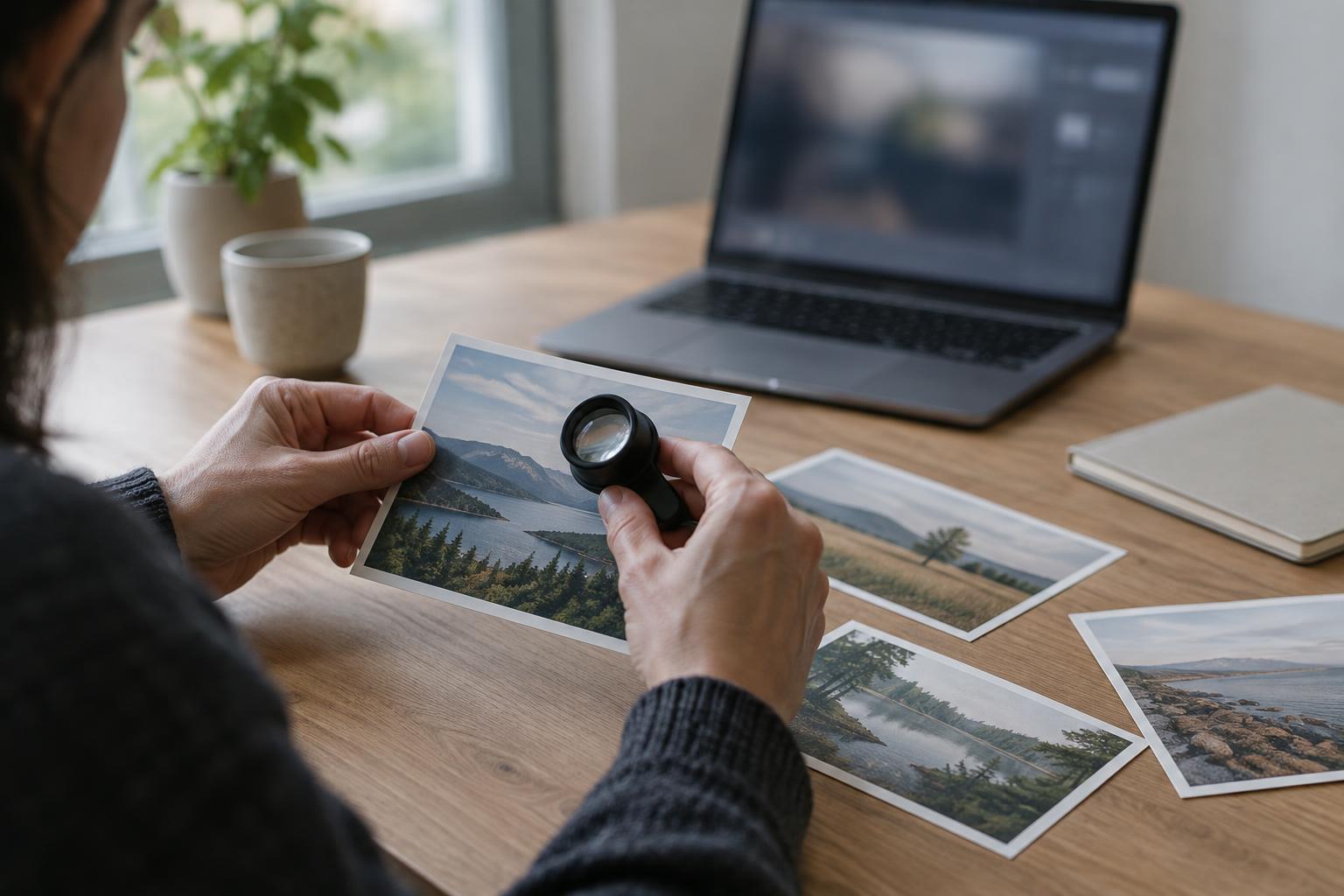
Next, trace the image as far toward its origin as you reasonably can. Look for the earliest available posting, the creator’s own description and versions with more context. A reverse image search may reveal earlier uses or different captions, though failing to find a match proves little. Check whether visible landmarks, signs, weather or other details are consistent with the stated context. Each observation should be treated as one piece of evidence, not a verdict.
If the creator or publisher is reachable, ask what the image is meant to show and how it was made. For consequential claims, seek independent corroboration, such as other images of the scene or reliable accounts of the event. When that evidence is unavailable, the responsible conclusion may simply be that the image’s origin or caption remains unverified.
Use provenance carefully
A file may contain metadata describing the camera, software or editing history, and some workflows can attach records of an image’s origin and changes. Such information can help establish a chain of custody when it is available and credible. But metadata can be removed during sharing, and ordinary file fields can be changed. An absence of provenance is not evidence that an image is synthetic; a reassuring-looking field is not a substitute for checking its source.
Provenance also answers a narrower question than truthfulness. A well-documented camera file could still be staged, selectively framed or assigned a misleading caption. Responsible interpretation asks both where an image came from and whether its presentation fairly represents what it claims to show.
Report uncertainty without spreading a false verdict
If a detector flags an image, describe the result precisely: the tool flagged it, but its origin has not been established. Avoid calling a photographer’s work fake on that basis alone. If you share a questionable image to discuss it, include enough context that readers will not mistake it for confirmed evidence. Corrections are harder once a confident label has traveled farther than the careful explanation behind it.
The most useful habit is to separate observations from conclusions. Record what you can see, what the image’s publisher claims, what you can independently check and what remains unknown. Detectors can help you decide where to look next. They cannot, on their own, prove that a picture is genuine, synthetic or truthful.