Why a sequence feels more convincing than a single frame
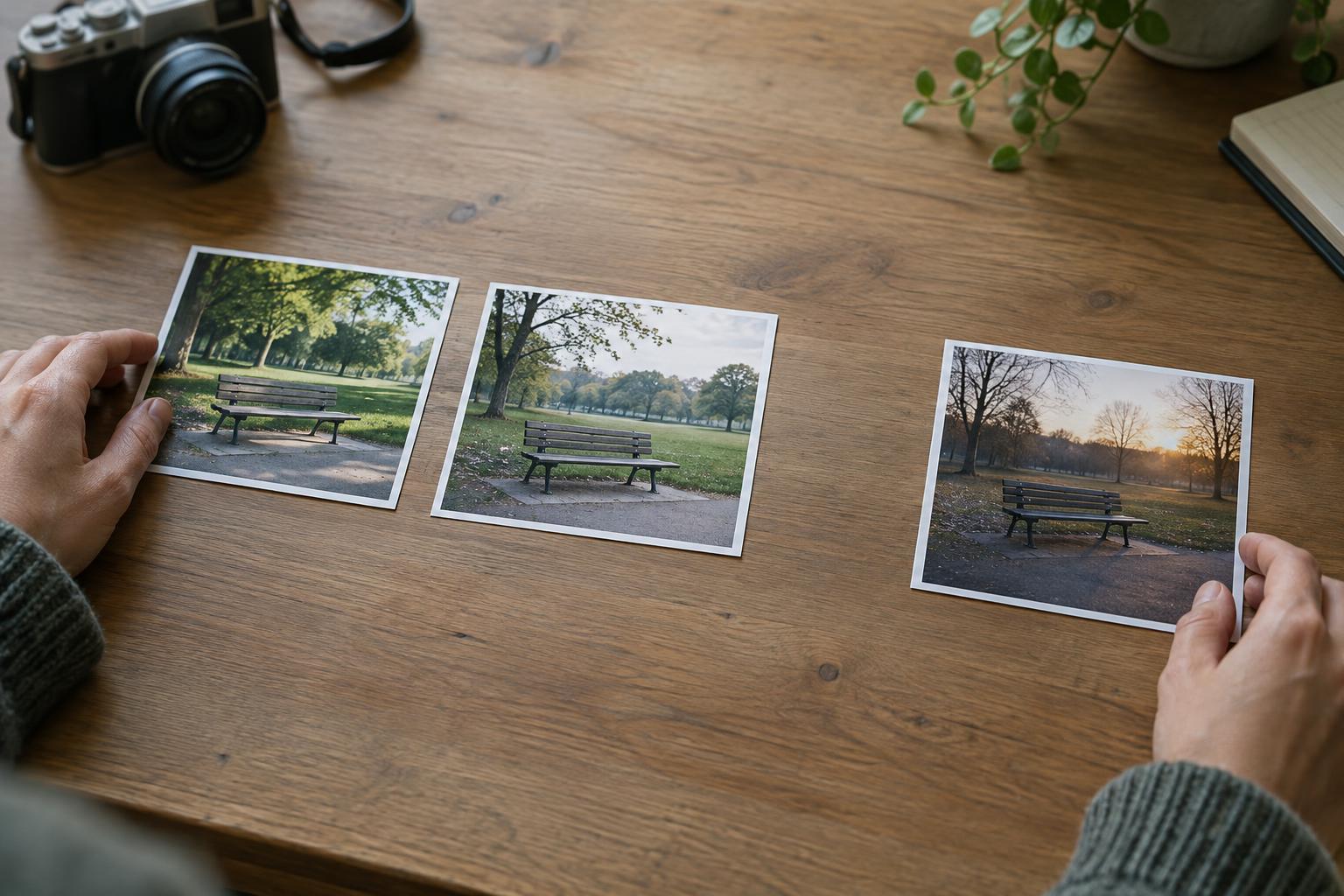
One photograph captures a limited view of a moment. Put several photographs together, and a viewer can easily perceive a beginning, a turning point and an outcome. That sense of progression is useful: sequences can reveal changes that an individual frame cannot. But the story a viewer constructs between frames is partly an inference. The camera may not have recorded what happened during those intervals.
Imagine three images: a person reaches toward a table, a cup lies on the floor, and the person looks down. It is tempting to conclude that the person knocked over the cup. The images might fit that explanation, but they do not establish it by themselves. Someone else could have moved the cup, or the frames could have been taken farther apart than their presentation suggests. The question is not whether the sequence is suspicious; it is which parts of its story are actually visible.
Separate observation, order and explanation
Start by describing each frame on its own, without using verbs that supply an unseen action. “A hand is near the table” is an observation; “the person pushes the cup” is an explanation unless the motion is visible. Then ask what supports the displayed order. A layout invites you to read left to right, but that arrangement alone does not prove the photographs were captured in that order. Captions or other context may explain the chronology, though they should be considered separately from the visible content.
Even a reliable order does not settle cause. If one frame shows a closed door and the next shows it open, you know the door’s appearance changed between the pictured moments. You do not necessarily know who opened it or why. This distinction matters when a sequence is used to imply blame, intent or a reaction. A careful description can say “the photographs show the door closed, then open” without claiming to document the intervening action.
Look for the moments and viewpoints you are missing
Consider how much time may have passed between frames. A sequence of adjacent-looking images could contain pauses; one with visibly different light or backgrounds may span a longer interval. Neither impression provides an exact duration without more information. Notice changes in clothing, objects, people and surroundings that might indicate a gap or a shift in place. Also ask whether the photographer maintained the same viewpoint. A change in camera position can hide an object or make two separate scenes appear continuous.
Selection matters as much as timing. A photographer or editor may have many frames and publish only a few. That is a normal part of making a readable story, not automatic evidence of deception. Still, omitted images can affect interpretation. A sequence showing an argument followed by an embrace might leave out a long conversation; a sequence showing a fall might leave out what happened just outside the frame. Treat the published set as a selection, not as a complete visual record.
Use a practical check before repeating the story
When a sequence makes a strong claim, try stating it in two sentences. First, write only what the frames visibly show. Second, write the conclusion the presentation invites you to draw. If the second sentence depends on an unpictured action, an assumed order or an inferred motive, make that uncertainty clear when describing or sharing the images. You need not reject the conclusion outright; you simply should not present it as something the photographs alone prove.
Read accompanying captions for details about place, timing and what happened between frames, while remembering that a caption is additional information rather than something visible in the images. If context is unavailable, a modest description is often the most accurate one. A photo sequence can be powerful evidence of visible changes across selected moments. Reading it responsibly means recognizing that the space between those moments is where the most compelling—and least certain—part of the story may sit.